The Cost of a Longevity Home
By Kenneth Bordewick, in clinical collaboration with Dr. Thom Lobe MD and Dr. Fouad I. Ghaly MD
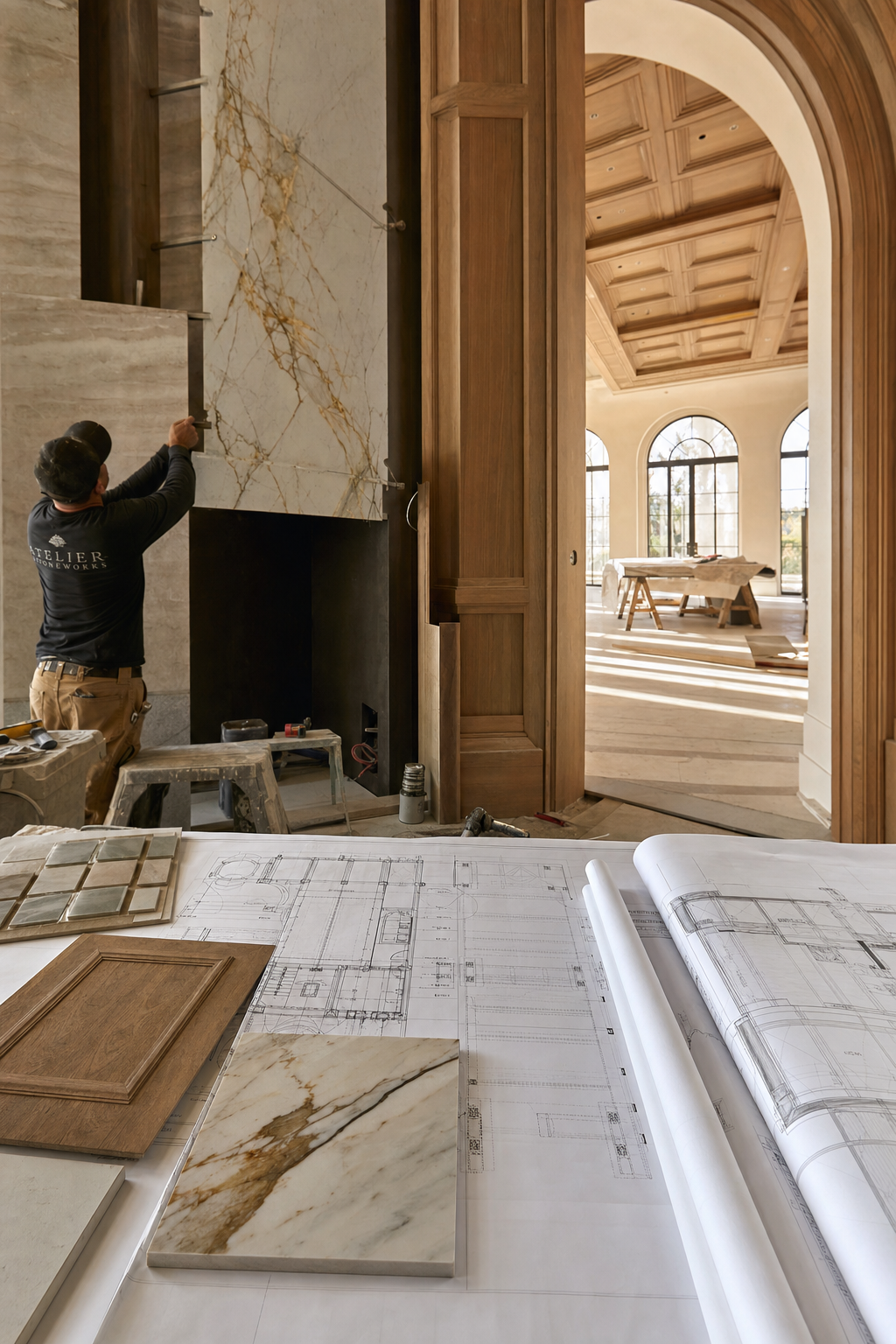
Clients ask me the cost of a longevity home in the first five minutes of nearly every consultation, and I understand why. It is the only question that matters practically, and it is also the question I am least able to answer with a single number. After thirty-one years designing residences from royal palaces to Beverly Hills compounds, I can tell you honestly that anyone who quotes you a flat figure before understanding your existing home, your climate, and your health priorities is guessing. What follows is the closest thing to an honest answer I can give: real ranges, the trade-offs behind them, and where I believe the money should go first.
Why the Question Is Harder Than It Looks
High-end residential renovation in the United States currently runs broadly between $140 and $400 per square foot depending on region, scope and finish level, before any wellness-specific systems are added (MAV Kreative Karpentry, 2026). That baseline has moved meaningfully in the past two years. Tariff policy affecting imported stone, hardware and specialty materials has pushed luxury construction costs upward across nearly every major market, and clients commissioning new builds or full renovations in 2026 are budgeting accordingly rather than pricing against 2023 figures (Own Luxury Homes, 2026).
Wellness infrastructure is no longer a discretionary add-on layered on top of that baseline. Industry analysis of the 2026 luxury buyer describes air quality systems, circadian lighting and water filtration as core expectations rather than premium upgrades, which changes how the number should be framed from the outset. The question is not “how much does wellness design cost on top of a normal renovation.” The question is “what does a 2026 luxury renovation cost, given that wellness infrastructure is now assumed to be part of it” (Inman, 2025). That reframing matters because it changes the comparison. You are not comparing a wellness home against a conventional one. You are comparing a well-specified home against a poorly specified one at a similar price point, and the difference in outcome is enormous even when the difference in cost is not.
Honest Ranges, Pillar by Pillar
I will not pretend every one of the Nine Pillars costs the same to implement, because the range across them is wide, and clients deserve to know where the real money goes. Circadian Light Architecture, meaning tunable, daylight-tracking fixtures with proper control systems throughout a primary residence, typically represents a meaningful but contained fraction of an electrical and lighting budget, since the fixtures and drivers cost more than standard equivalents but the labor is comparable. Air Excellence, by contrast, can vary enormously depending on whether you are retrofitting an existing HVAC system or specifying a new one, and whether the home requires full envelope sealing to make filtration meaningful in the first place. On a Bel Air estate we retrofitted after two consecutive wildfire seasons, the client's primary demand was not aesthetic at all. He wanted a home that would remain safely occupiable during smoke events without evacuating his family, which meant MERV-16 filtration, positive-pressure sealing at every exterior door, and a dedicated clean-air room rated for extended occupancy. That system alone was one of the largest single line items in the renovation, and he told us afterward it was also the one he thought about least once it was installed, because it simply worked.
Material Purity and Microplastic Elimination sits at the opposite end of the visibility spectrum. Clients rarely notice this pillar in a walkthrough, yet it is frequently the one with the most consequential health impact, and the one most commonly skipped entirely by firms unfamiliar with off-gassing chemistry. On a Mayfair pied-a-terre commission, the client had already completed a full renovation with another firm eighteen months prior and was experiencing persistent headaches and poor sleep in a beautifully finished apartment. Our air quality baseline identified elevated VOC readings traceable to sealants and composite substrates behind otherwise premium finishes, a problem we have written about at length elsewhere (your home is poisoning you with microplastics). Remediation meant selectively removing and replacing affected substrates rather than a full re-renovation, which kept the cost well below what the client feared, but it illustrates a broader point: money spent on visible finish with no attention to underlying material chemistry is money that can require a second spend later to fix invisibly.
Water as Luxury Utility spans an enormous range depending on source water quality and the sophistication of the system specified, from a whole-home filtration and remineralization system at a moderate cost, to a full multi-stage system with dedicated hydrogen-infused and structured water outputs at a considerably higher one. A Manhattan physician couple came to us specifically because their building's municipal water, while safe by regulatory standard, tested poorly on their own home water panel for chlorination byproducts and heavy metal trace elements. They chose a mid-tier system prioritizing filtration completeness over exotic features, which is frequently the right choice, since the marginal benefit of the most expensive systems is real but smaller than the marginal benefit of moving from no filtration to good filtration. Electromagnetic Quiet and Acoustic Serenity tend to be the most cost-efficient pillars per dollar spent, since shielding paint, hardwired ethernet in place of mesh wifi in sleeping areas, and targeted acoustic treatment are comparatively inexpensive relative to their impact on sleep quality. Grounding and Earthing and Thermal Comfort and Contrast Therapy, meaning cold plunge and sauna installations, sit at the higher end when done properly, largely due to the mechanical and plumbing work involved rather than the fixtures themselves. Blood Filtration and Detoxification, where clients pursue it, is typically a clinical rather than architectural expense and sits outside the construction budget entirely.
Independent estimators corroborate this spread. A national renovation cost estimator shows luxury-tier finishes running two to four times standard-tier costs across nearly every category, which tracks closely with what we see in wellness-specific systems, where the premium buys verified performance rather than merely a better-looking version of the same thing (Remodelum, 2026). Market data from luxury-specific wellness features corroborates the value case: homes in wellness-forward markets with documented air and water systems have shown measurable price premiums over comparable homes without them, which suggests the spend is defensible even on pure resale logic, independent of the health case (The Luxury Realtor Group, 2026).
Spending Versus Investing
I want to be direct about something the industry is not always honest about. Not every wellness-adjacent expenditure is a good one, and some of what gets marketed as wellness design is simply expensive decoration with a health narrative attached. A steam shower with chromotherapy lighting is a lovely amenity. It is not, by itself, a measurable intervention in your air quality, your water quality, or your sleep architecture, and treating it as equivalent to those investments is how clients end up with beautiful, expensive homes that do very little for their actual physiology. The distinction I ask every client to hold onto is this: does the expenditure change a measurable input, being air, light, water, sound, EMF, temperature, materials, or does it change only the aesthetic experience of an unchanged input. Both have value. They are not the same value, and they should not be budgeted as though they were.
This distinction matters more given where the broader market is heading. The Global Wellness Institute's most recent analysis values the wellness real estate market at $876 billion in 2025, projected to reach $1.8 trillion by 2030, which reflects capital moving decisively toward documented, measurable wellness infrastructure rather than aesthetic wellness branding (Global Wellness Institute, 2025). That is not a marketing statistic I cite lightly. It represents a genuine reallocation of capital toward homes that perform differently, not merely homes that look different, and it is the clearest signal I know of that this spending category has moved from indulgence to infrastructure in the eyes of the market itself.
“Clients frequently ask me to justify the cost of a hyperbaric or air quality intervention against an unlimited list of alternative uses for that capital. My answer is always the same: your cardiovascular system and your respiratory system do not care what else the money could have purchased. They respond to the environment you actually give them, every single day, for decades.”
— Dr. Fouad I. Ghaly, MD
The Phased Approach: An Honest Entry Point
Not every client should, or needs to, commission a full nine-pillar renovation on day one, and I actively discourage clients from doing so before they understand which pillars matter most for their specific home and health profile. This is why we begin nearly every serious engagement with the Longevity Home Wellness Design Audit, which measures your existing home's baseline across light, air, water, acoustics, EMF and materials before a single dollar is committed to construction. The audit itself costs a small fraction of even the most modest renovation phase, and it converts an abstract, anxiety-inducing question, being “what will this cost,” into a prioritized, evidence-based roadmap.
A Beverly Hills compound commission illustrates the value of phasing well. The client, having read extensively about wellness design, arrived ready to commission all nine pillars simultaneously at a cost that would have strained even his considerable resources unnecessarily. Our audit revealed that his home's air and water systems were already reasonably sound, having been updated within the past five years, while his lighting was entirely fluorescent-era and his acoustic environment was compromised by an open-plan renovation that had prioritized sightlines over sound. We phased the project around the Nine Pillars most relevant to his actual baseline, beginning with Circadian Light Architecture and Acoustic Serenity, deferring water and air system replacement until their existing systems approached end of life. He spent roughly forty percent of what he had originally budgeted in year one, addressed his most pressing deficiencies first, and scheduled the remainder over eighteen months rather than compressing everything into a single disruptive renovation.
An Aspen recovery retreat commission took the opposite entry point deliberately. The client, recovering from a serious cardiac event, needed the highest-impact pillars addressed immediately regardless of sequencing convenience, so we prioritized Air Excellence and Thermal Comfort and Contrast Therapy in the first ninety days, with the remaining pillars phased over the following year once his most urgent physiological needs were addressed. Both approaches were correct for their respective clients. Neither would have been correct for the other. This is precisely why a generic price quote before an audit is close to meaningless.
What Drives the Number Up, and What Does Not Have To
Certain conditions reliably increase cost regardless of which pillars you prioritize. Existing envelope problems, meaning poor insulation, air leakage, or outdated ductwork, mean that filtration and circadian lighting systems must work against a compromised shell, which increases both installation cost and ongoing energy cost. Older homes with legacy plumbing frequently require more extensive work to achieve meaningful water quality improvement than newer construction with intact piping. Climate matters enormously. A home in a wildfire-prone region requires a fundamentally different air strategy than one in a humid coastal climate, and pretending otherwise leads to underperforming systems regardless of budget.
What does not have to drive the number up is scope creep disguised as necessity. I have seen firms recommend full system replacement when a targeted retrofit would achieve ninety percent of the benefit at a fraction of the cost, and I have seen the opposite, where clients insisted on the most expensive available system for a pillar that mattered comparatively little to their specific health profile. A rigorous audit, followed by a designer willing to tell you honestly which upgrades matter most for your specific home and body, is the single most effective way to control cost without compromising outcome. This is precisely why I distrust any firm, mentioned in our companion piece on how to hire a luxury wellness interior designer, that proposes a full scope before measuring anything.
A Note on Financing and Resale Value
Clients frequently ask whether this spend is defensible on resale grounds alone, independent of the health case, and the honest answer is increasingly yes. Sotheby's most recent luxury outlook identifies wellness real estate as one of the fastest-growing preference categories among high-net-worth buyers globally, a trend it expects to accelerate rather than plateau through the remainder of the decade (Sotheby's 2026 Mid-Year Luxury Outlook via Yahoo Finance). Architectural Digest's 2026 trends coverage similarly identifies documented wellness infrastructure, rather than aesthetic wellness branding, as one of the defining differentiators in the luxury resale market this year (Architectural Digest, 2026). None of this should be the primary reason to invest in a longevity home. Your health is. But for clients weighing the decision partly through a financial lens, the resale data no longer requires much of a leap of faith.
The ÖND Perspective
I do not believe in shielding clients from real numbers, and I do not believe in pretending every pillar costs the same or matters equally for every home. What I believe, after three decades of doing this work, is that the honest sequence is measurement before commitment, prioritization before spending, and physician-informed judgment before aesthetic preference, in that order. Our philosophy reflects that sequence deliberately, and it is why our engagements begin with an audit rather than a mood board. If you want to understand how we think about the rest of this discipline, the Journal is where we publish that thinking openly, including the pieces that complicate rather than simplify the sales pitch.
Begin With a Conversation
The most useful first step, regardless of budget, is not a renovation proposal. It is a measured baseline of what your home is currently doing to you, and an honest, prioritized view of where your money would do the most good. Commission a Longevity Home Wellness Design Audit and you will have that baseline in hand before committing a dollar to construction.
When you are ready, write to us and we shall begin with a conversation.
Sources
- High-End Home Renovation Cost Data, MAV Kreative Karpentry
- Tariff Impact on Luxury Construction Costs 2026, Own Luxury Homes
- Home Renovation Cost Estimator, Remodelum
- Luxury Real Estate Trends 2026, Architectural Digest
- Luxury's Next Phase: What The 2026 Buyer Really Wants, Inman
- Wellness Features That Actually Add Value, The Luxury Realtor Group
- Wellness Real Estate Market Reaches $876 Billion, Global Wellness Institute
- Wellness real estate is trending among the rich, Sotheby's 2026 Mid-Year Luxury Outlook via Yahoo Finance
- The Nine Pillars, ÖND
- The Longevity Home Wellness Design Audit, ÖND
Commission Your Longevity Home Wellness Design Audit
The Longevity Home Wellness Design Audit — offered by Beverly Hills Luxury Interiors and ÖND | Life's Breath™ in clinical collaboration with Dr. Thom Lobe MD and Dr. Fouad I. Ghaly MD — is a comprehensive assessment of your current home's biological environment: material toxicology, air and water purity, acoustic conditions, circadian light architecture, electromagnetic exposure, and thermal comfort. It delivers a prioritised, physician-reviewed roadmap for transformation — the first step towards a home that does not merely shelter, but actively extends your health, clarity, and vitality. Your environment is shaping your biology in every moment. The question is whether it is doing so with intention.
Enquire About Your Audit