Wellness at Sea and in the Air: Designing Healthier Yachts and Private Aircraft
By Kenneth Bordewick · 5 min read
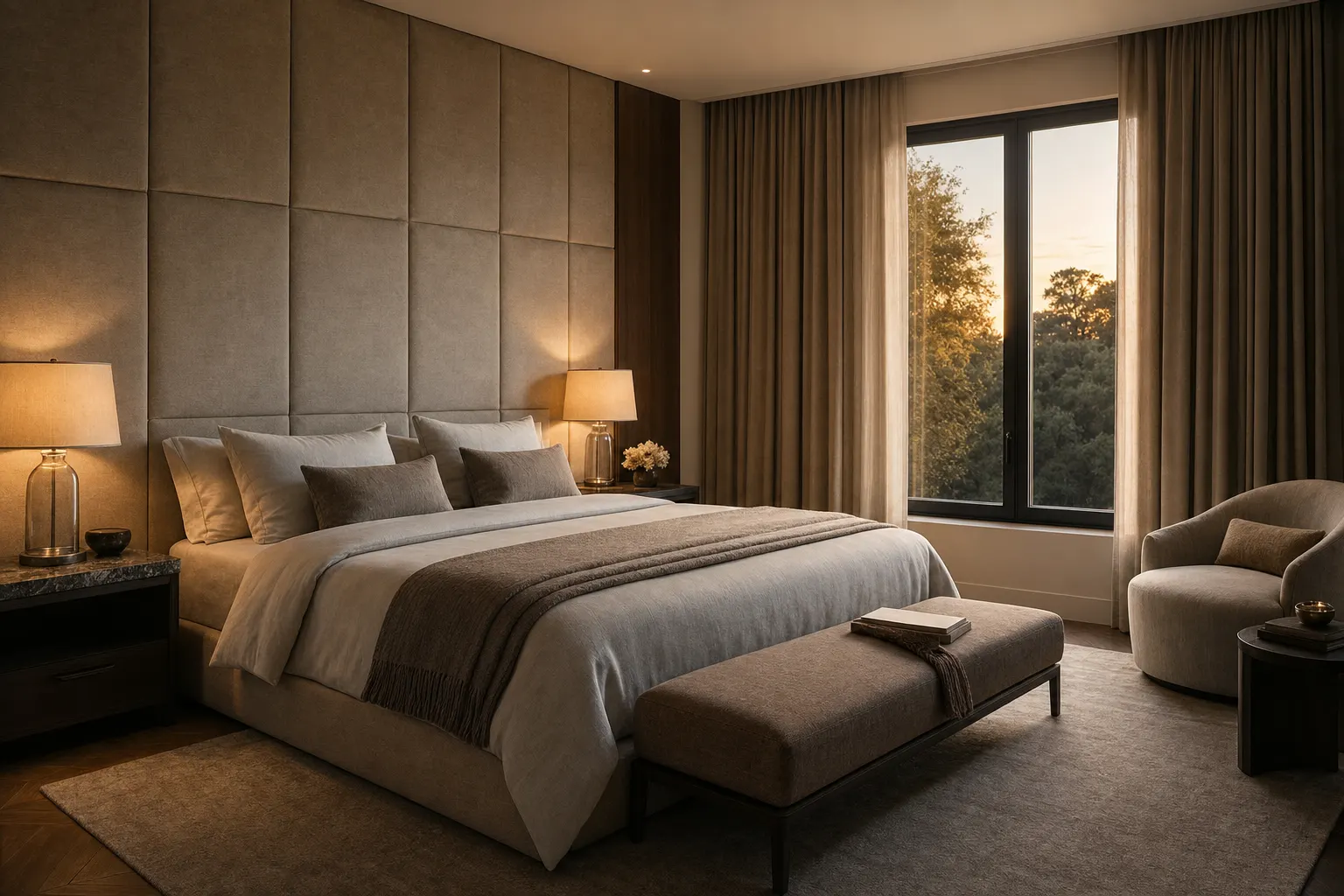
For many of our clients, the yacht and the aircraft are simply other rooms of the home. They deserve the same care for light, air, sound and materials, and in some respects they need it more.
A cabin is a small, sealed space shared by several people for many hours, often while crossing time zones. That makes it one of the most demanding environments in which to practise wellness design. Having designed for clients on land, at sea and in the air, including a yacht in Monaco for His Royal Highness Prince Al Waleed bin Talal Al Saud, I approach the yacht and the aircraft with the same Nine Pillars as the house, adapted to their very particular constraints.
Air in a sealed cabin
Aircraft cabin air on a long flight is notably dry, and both aircraft and yacht interiors depend entirely on their mechanical systems for fresh air. Filtration, the rate of fresh-air supply and, on aircraft, humidification are subjects to raise with the completion centre or shipyard at the very beginning, because they are difficult to change afterwards.
Light for the body clock
Crossing time zones disrupts the body clock. Cabin lighting that can be programmed to support the destination's day, brighter and cooler when it is morning there and warmer and dimmer as its evening approaches, can make arrival gentler. On a yacht, daylight and the sea are the great gifts; the interior should frame them, and the sleeping cabins should become properly dark.
Sound and vibration
Continuous engine and air noise on an aircraft, and machinery and wave noise on a yacht, are tiring even when we stop noticing them. Acoustic insulation, decoupled panels and soft materials should be designed in from the start, with particular attention to the sleeping areas.
Material purity in a small space
In a cabin, every material sits close to the people using it, and the volume of air is small. That makes material purity especially important. The difficulty is that aircraft and large yacht materials must meet strict fire-safety standards, and some fire treatments are chemically active. The answer is to work with the certification requirements, not against them: choosing certified materials with the cleanest available composition, and allowing new interiors to air before first use.
Water on board
Yachts make and store their own water, and its quality depends on the treatment system and how well it is maintained. Testing, sensible filtration for drinking water and a clear maintenance routine for the crew belong in the wellness specification.
Wellness spaces at sea
Larger yachts increasingly include gyms, saunas, steam rooms and treatment rooms. They can be wonderful, but they bring heat, moisture and weight to a vessel, and they should be planned with the naval architect from the outset. On an aircraft, the wellness space is usually the bedroom and bathroom, and the focus is on sleep.
Every ÖND commission begins with a private conversation. Call (310) 274-9999, write to kenneth@bhli.us, or read the Nine Pillars of Wellness Design to see the full framework.
Frequently Asked Questions
Common Questions
Can wellness design be applied to a yacht or private jet?
How can cabin design help with jet lag?
Why is material purity important on a yacht or aircraft?
Who designs wellness interiors for superyachts?
Every ÖND residence begins with a private conversation.