The Healthy Home Office: Wellness Design for Long Working Days
By Kenneth Bordewick · 5 min read
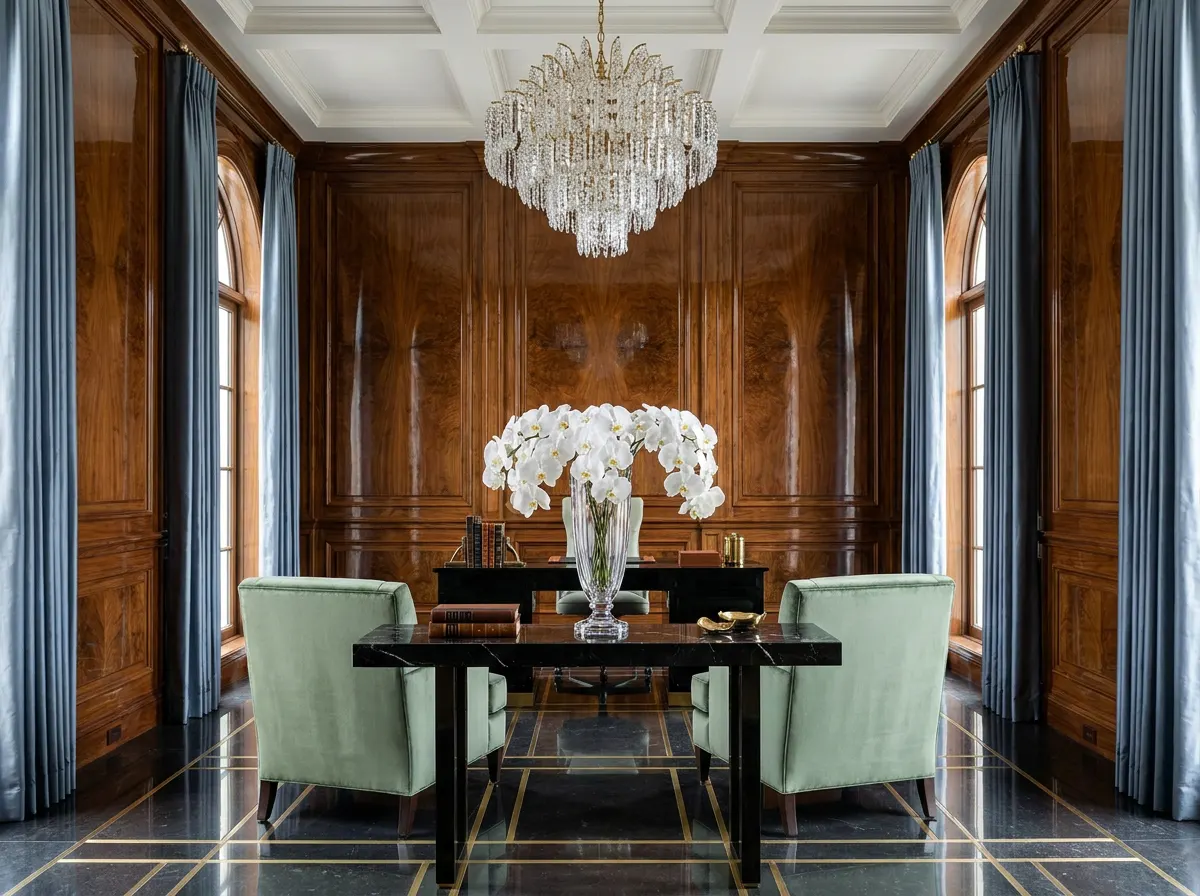
For many of my clients, the home office is now the room in which they spend the most waking hours. It deserves at least as much care as the bedroom, and it rarely receives it.
A beautiful study is easy to design. A study in which someone can work well for ten hours, and still feel well at the end of the day, takes more thought. These are the principles I apply in ÖND commissions.
Daylight first
Place the desk where it receives good daylight, ideally from the side rather than directly behind the screen, which causes glare, or behind the person, which causes reflections. A view out, particularly to greenery or the horizon, gives the eyes somewhere restful to go between tasks.
Light that follows the day
Supplement daylight with lighting that is bright and cooler during the working morning and warmer and lower in the late afternoon and evening. Task lighting should be glare-free and adjustable. The aim is to keep the body clock anchored to the day, so that a long working day does not cost a night's sleep.
Fresh air for clear thinking
A closed study with one or two people in it can accumulate carbon dioxide quickly, particularly during long video calls with the door shut. Good mechanical ventilation, or at the very least a window that can be opened and a carbon dioxide sensor on the desk, makes a noticeable difference to how alert one feels by mid-afternoon.
Acoustics for calls and concentration
Hard, beautiful rooms are often poor for video calls. Upholstered panels, curtains, rugs, books and acoustic ceilings soften the sound, improve call quality and reduce fatigue. Locating the study away from the kitchen and children's rooms, with a well-sealed door, protects concentration.
The body at work
- A desk at the correct height, or a sit-stand desk, with the screen at eye level.
- A chair chosen for the body, not only for its appearance.
- Space to move, stretch and change position during the day.
- Cable management and power planned so that equipment does not crowd the desk.
A calmer electrical environment
A home office concentrates routers, screens, chargers and printers in one place. Where possible, I prefer wired connections at the desk, equipment kept tidy and to one side, and routers positioned thoughtfully, away from where people sit for long periods.
A clear boundary
Finally, the study should allow work to end. Joinery that closes over screens and papers, lighting that changes for the evening, and a door that shuts help to separate the working day from family life. It is a small thing that makes a great difference to wellbeing.
Every ÖND commission begins with a private conversation. Call (310) 274-9999, write to kenneth@bhli.us, or read the Nine Pillars of Wellness Design to see the full framework.
Frequently Asked Questions
Common Questions
How do I design a healthy home office?
Where should a desk face in a home office?
Why do I feel tired working in my home office?
Does ÖND design home offices?
Every ÖND residence begins with a private conversation.