Smart Home Technology That Supports Wellness, Without the Noise
By Kenneth Bordewick · 5 min read
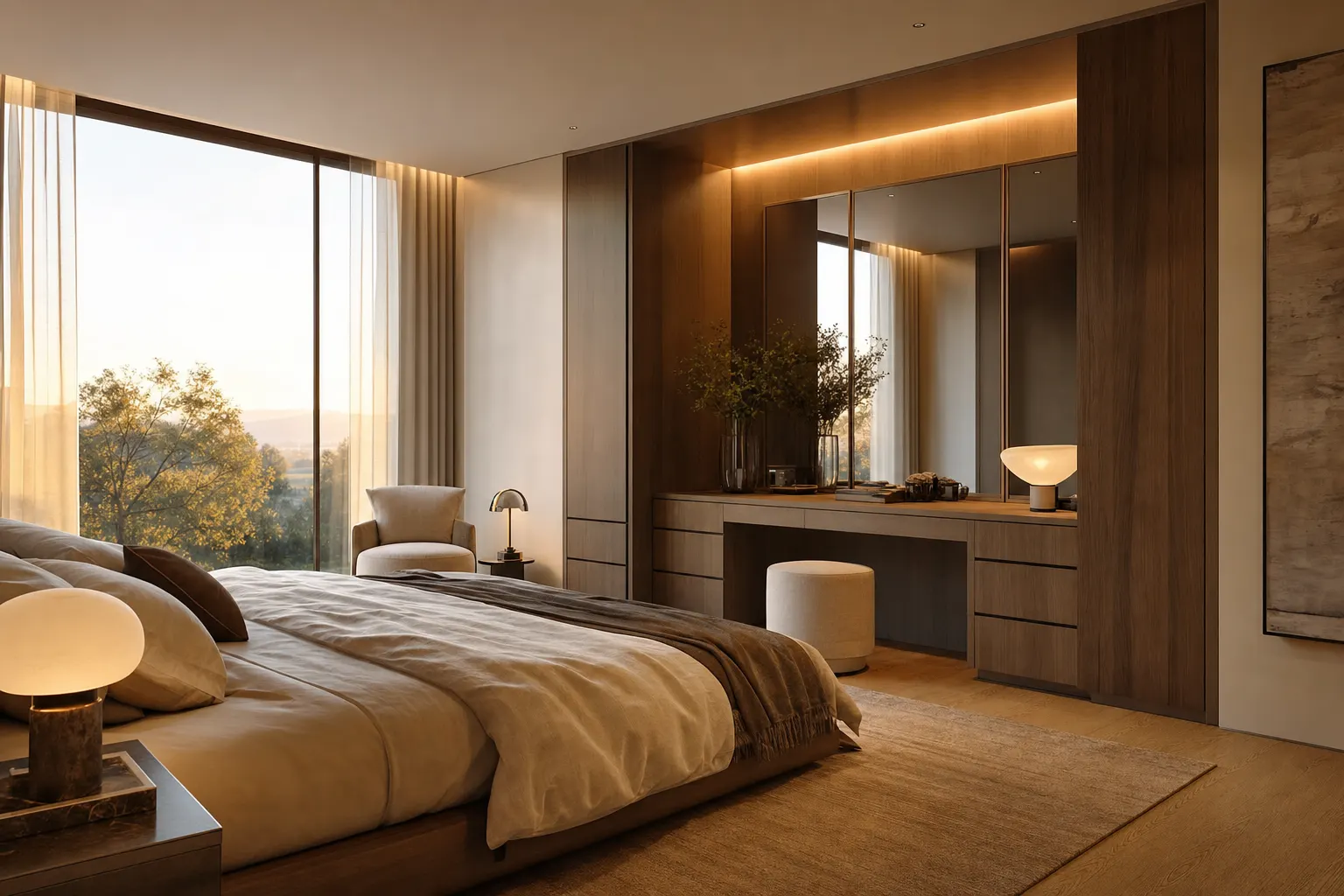
Technology can make a home healthier, quietly adjusting its light, air and temperature through the day. It can also fill the house with screens, signals and complexity. The art lies in using the first without suffering the second.
I am often asked whether wellness and smart homes are compatible. They are, if the technology is chosen to serve the household's health rather than to impress. These are the principles I follow in ÖND commissions.
Sense, then respond
The most useful smart technology is measurement. Sensors for carbon dioxide, fine particles, VOCs, temperature and humidity, linked to ventilation and filtration, allow the house to respond automatically when air quality changes. Leak sensors with automatic shut-off protect against water damage and mould.
Automate light for the body clock
Circadian lighting that brightens and cools in the morning and warms and dims in the evening, following sunrise and sunset, is one of the best uses of automation in any home. Blinds that open gently in the morning and close at dusk support the same rhythm.
Wire what you can
A well-designed wired network serving desks, televisions and fixed equipment reduces reliance on wireless signals and is faster and more reliable. Wireless access points can then be placed thoughtfully, away from beds and seating, and scheduled to reduce output at night where the system allows.
A quieter electrical environment
- Thoughtful wiring layouts in bedrooms, away from bedheads.
- Switchable circuits so bedrooms can be electrically quieter at night.
- Equipment racks and routers located in dedicated technical rooms.
- Wired or low-emission baby monitors and bedside devices.
- Chargers kept out of sleeping areas.
Keep it invisible and simple
The household should be able to live in the house without understanding its systems. A small number of elegant keypads with clear scenes, and an app for those who want it, are enough. Equipment belongs in technical rooms, not on view. If the family needs a technician to change the lights, the system has failed.
Privacy and security
Connected devices collect data. Choose reputable systems, secure the network properly, limit cameras and microphones in private rooms, and make sure the household knows what is recorded and where. A wellness home should feel private as well as healthy.
Every ÖND commission begins with a private conversation. Call (310) 274-9999, write to kenneth@bhli.us, or read the Nine Pillars of Wellness Design to see the full framework.
Frequently Asked Questions
Common Questions
Can a smart home be a healthy home?
What smart home features support wellness?
How do I reduce wireless exposure in a smart home?
Does ÖND design smart home systems?

Every ÖND residence begins with a private conversation.