Mould and Moisture: The Hidden Threat in Luxury Homes
By Kenneth Bordewick · 5 min read
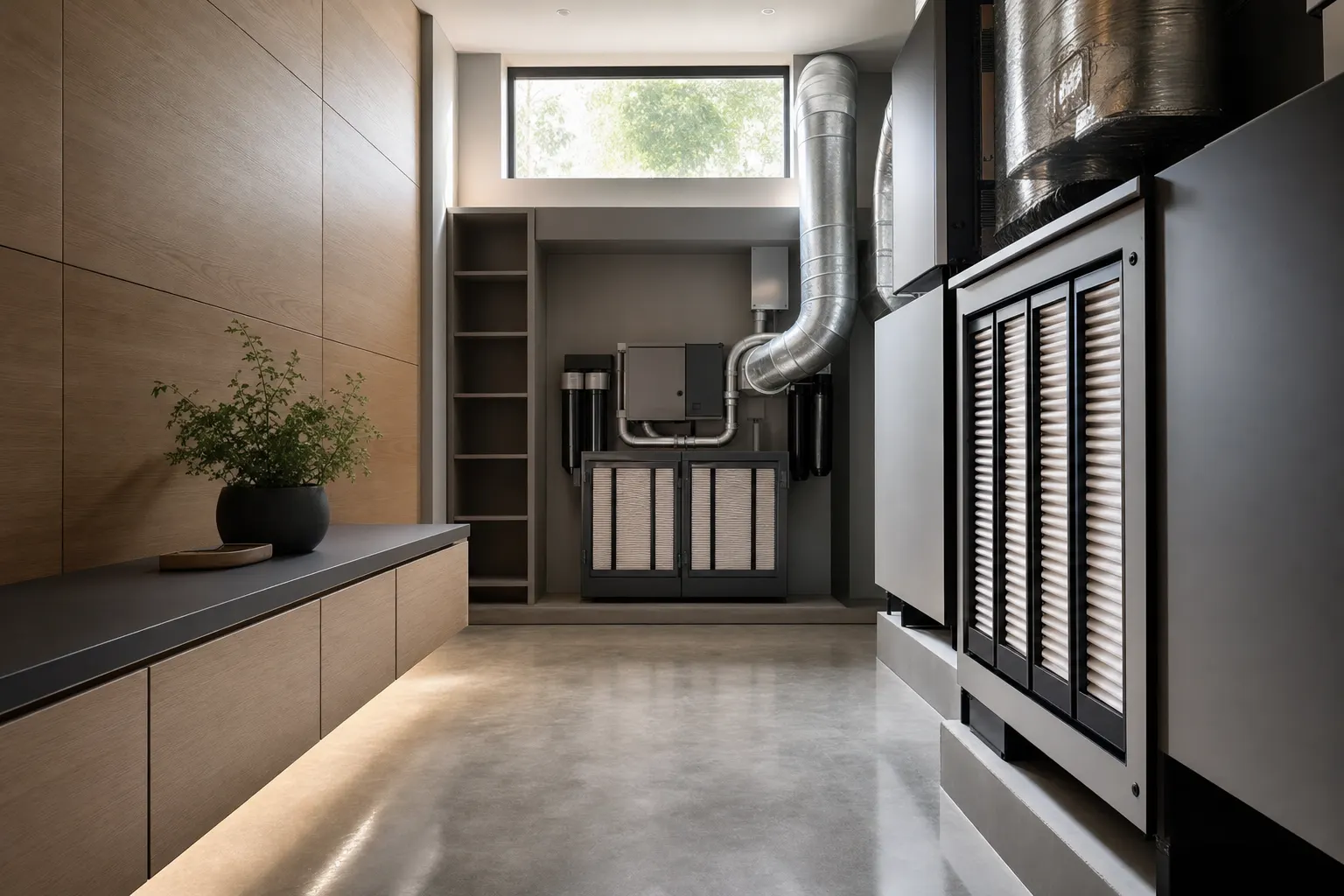
Mould is the most common hidden problem I find in fine houses. It thrives behind beautiful finishes, and it is almost always the result of moisture that design could have prevented.
Luxury homes are not immune to mould; in some ways they are more vulnerable. Spa bathrooms, steam rooms, indoor pools, wine rooms, basements, large glazed walls and complex roofs all bring water and humidity into play. The answer is not to avoid these spaces but to design them with moisture firmly in mind.
Control humidity everywhere
Mould needs moisture. Keeping relative humidity roughly between 40 and 60 per cent, and below the upper end in most rooms, removes the conditions it needs. Dehumidification in humid climates and wet rooms, continuous ventilation, and monitoring in vulnerable spaces are the foundation.
Ventilate wet rooms properly
Bathrooms, steam rooms, laundries, kitchens and pool halls must have dedicated, correctly sized extraction that runs long enough after use to clear the moisture. Many fine bathrooms have extract fans that are too small, too noisy to be used, or switched off with the lights.
Waterproof as if it matters
Showers, steam rooms, terraces, roofs and basements depend on waterproofing that is invisible once finished. It must be specified correctly, installed by specialists and tested before tiles and stone go down. Repairing a failed membrane beneath finished marble is one of the most expensive corrections in residential construction.
Choose forgiving materials
- Mineral plasters and lime finishes that handle moisture well.
- Moisture-resistant boards behind wet-area finishes.
- Avoiding vinyl wall coverings that trap moisture in walls.
- Solid timber and stone in wet areas, correctly sealed.
- Insulation detailed to prevent condensation on cold surfaces.
Detect leaks early
Leak sensors under sinks, appliances, water heaters and in plant rooms, with automatic shut-off valves on the main supply, can prevent a small leak from becoming a catastrophe. In a house that is often empty, they are essential.
If mould is found
Visible mould, a persistent musty smell or unexplained symptoms warrant professional assessment. The moisture source must be found and fixed first; otherwise the mould will return. Remediation should be carried out by qualified specialists with proper containment, followed by verification testing. Painting over mould only hides it.
Every ÖND commission begins with a private conversation. Call (310) 274-9999, write to kenneth@bhli.us, or read the Nine Pillars of Wellness Design to see the full framework.
Frequently Asked Questions
Common Questions
How do you prevent mould in a luxury home?
Where does mould usually grow in luxury homes?
What should I do if I find mould in my house?
Does ÖND test homes for moisture and mould risk?



Every ÖND residence begins with a private conversation.