Microplastics: The Invisible Threat in Your Home
By Kenneth Bordewick | Beverly Hills Luxury Interiors | ÖND | Life's Breath™ · In clinical collaboration with Dr. Thom Lobe MD and Dr. Fouad I. Ghaly MD
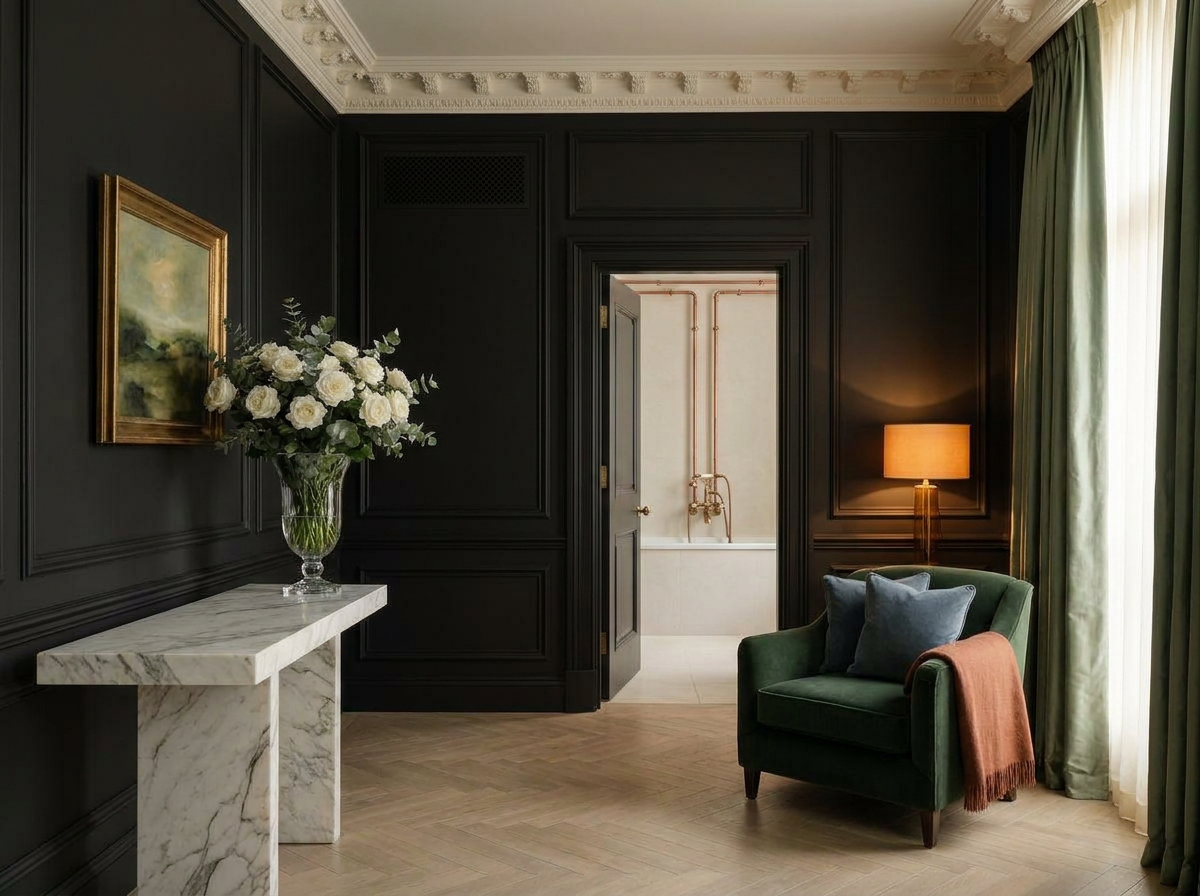
Scientists at Vrije Universiteit Amsterdam published a study in 2022 confirming what many in environmental medicine had long suspected: microplastics are present in the blood of 77% of participants tested. A subsequent study published in PLOS ONE detected microplastic particles in the lung tissue of 11 out of 13 patients undergoing surgery. More recently, research published in The New England Journal of Medicine (2024) linked microplastic accumulation in arterial plaque to a 4.5-fold increased risk of cardiovascular events within 34 months. These are not projections. They are findings from peer-reviewed science — and they demand a rethinking of the most intimate environment in which we spend our lives: the home.
The question, for those who inhabit the world's finest residences, is not whether microplastics exist in their environment. It is: what proportion of the daily intake is originating from the home itself?
The Home as Primary Exposure Environment
The average person spends more than 90 per cent of their life indoors. Of that time, the majority is spent in the home. And yet the interior environment — its textiles, its finishes, its air, its water — has never been designed with biological integrity as a primary criterion.
Synthetic carpets, acrylic draperies, and polyester upholstery shed microplastic fibres continuously. Conventional air conditioning and forced-air heating systems recirculate these particles through every room. Plastic plumbing components leach micro- and nanoplastics into drinking water. PVC flooring, vinyl wall coverings, and synthetic paint binders off-gas polymer fragments with every temperature fluctuation.
A standard ultra-luxury home — if designed without attention to material purity — can expose its occupants to millions of microplastic particles per day, simply through the act of living within it. This is not a hypothesis. It is the conclusion of a growing body of environmental health research that Beverly Hills Luxury Interiors has studied rigorously, in partnership with physician colleagues who operate at the frontier of clinical longevity medicine.
The Microplastic Elimination Protocol: Design as Medicine
At Beverly Hills Luxury Interiors, principal designer Kenneth Bordewick and the firm's physician partners — Dr. Thom E. Lobe MD and Dr. Fouad I. Ghaly MD — have developed what they call the Microplastic Elimination Protocol: a suite of design decisions that, taken together, reduce the synthetic load of a residential environment to near-zero.
The protocol proceeds across seven material categories.
Natural Fibre Textiles
Every upholstered surface — sofas, draperies, cushions, carpets, bed linens — is specified in wool, linen, cashmere, silk, or cotton with confirmed natural dyeing processes. No polyester. No nylon. No acrylic. The material that receives a body for eight hours each night is among the most consequential choices a designer will make.
Natural Stone, Hardwood, and Plaster
Flooring and wall surfaces are specified in materials that do not shed polymer fragments: limestone, honed marble, wide-plank hardwood with natural oil finishes, Venetian plaster. Synthetic laminates and vinyl compositions are eliminated from every specification — not because they are aesthetically inferior, but because they are biologically dishonest.
H14-Grade HEPA Air Purification
H14-grade HEPA filtration captures particles as small as 0.1 microns — well below the threshold of most microplastic fibres. Systems are integrated architecturally, invisible behind grilles and within climate control ductwork. The air of the longevity home is not merely clean; it is clinically pure.
Whole-Home Water Filtration
A multi-stage system incorporating activated carbon, reverse osmosis, and ultrafiltration removes microplastics from every water outlet in the residence, including bathing and cooking supplies. The Quiet Luxury Wellness Design philosophy demands that water — one of the Four Elements — be delivered to the body with the same integrity that the finest mineral springs have always promised.
Copper, Glass, and Stainless Steel Plumbing
Plastic-lined pipes and plastic fittings are replaced wherever feasible with materials that do not leach polymer compounds into the water supply. The beauty of exposed copper pipework in an architecturally considered bathroom is not incidental; it is evidence of a biological commitment that extends to every fitting within the residence.
Natural Finishes and Low-VOC Binders
All paints, varnishes, and sealants are specified with mineral or plant-based binders. No vinyl acrylic. No alkyd synthetics. Finishes are selected not only for their aesthetic quality but for their biological integrity across the life of the residence — because a wall that off-gasses polymer compounds for a decade is not a design success. It is a slow failure.
Sauna Integration
Far-infrared and traditional Finnish sauna facilities are incorporated into the residential programme where space allows. Thermal stress protocols, endorsed by both Dr. Lobe and Dr. Ghaly, support the body's natural detoxification pathways alongside the reduction of environmental intake — completing the Microplastic Elimination Protocol with a physiological dimension that no material specification alone can provide.
A Convergence of Design and Clinical Medicine
The Microplastic Elimination Protocol is not marketed as a medical intervention — Beverly Hills Luxury Interiors does not administer clinical treatments. What the firm provides is the environmental foundation that enables clinical longevity to be pursued at its highest level.
Dr. Thom E. Lobe MD and Dr. Fouad I. Ghaly MD serve as clinical partners to both Beverly Hills Luxury Interiors and ÖND | Life's Breath™, extending their physician collaboration across all residential commissions — not only those branded under the ÖND methodology. Every BHLI residential commission carries this credential.
“The human body can sustain a great deal. What it cannot sustain indefinitely is an environment that delivers a continuous, unrelenting synthetic burden with every breath, every sip of water, every hour spent in a space designed without regard for biological consequence.”
— Dr. Thom E. Lobe MD, Clinical Partner, Beverly Hills Luxury Interiors & ÖND | Life's Breath™
This statement encapsulates the philosophy guiding every project undertaken by Beverly Hills Luxury Interiors. A residence of genuine luxury is one designed for the full span of a life — not merely for the impression it makes upon arrival. It is a home that does not merely look extraordinary. It performs extraordinarily, in service of the biology of those who live within it.
Commission Your Longevity Home Wellness Design Audit
The Longevity Home Wellness Design Audit is a comprehensive assessment of your home's biological environment — examining air quality and microplastic burden, water purity, material toxicity, circadian light architecture, EMF exposure, acoustic serenity, and thermal comfort — informed by the clinical insight of Dr. Thom E. Lobe MD and Dr. Fouad I. Ghaly MD and the design intelligence of Kenneth Bordewick. The audit delivers a prioritised, physician-informed report and a phased roadmap for transformation. Beverly Hills Luxury Interiors and ÖND | Life's Breath™ accept a limited number of audits each year.
Enquire About Your AuditSources: Ragusa A. et al., Heliyon (2021) — Plasticenta: first evidence of microplastics in human placenta. | Leslie H.A. et al., Environment International (2022) — first detection of microplastics in living human blood. | Amato-Lourenço L.F. et al., PLOS ONE (2021) — microplastics in human lung tissue. | Marfella R. et al., New England Journal of Medicine (2024) — microplastic and nanoplastic particles in coronary artery disease. | WHO Guidelines on Indoor Air Quality (2010). | Reference: Dr. Thom E. Lobe MD, Beneveda Medical Group. | Reference: Dr. Fouad I. Ghaly MD. | Beverly Hills Luxury Interiors | ÖND | Life's Breath™