Designing a Meditation and Breathing Room at Home
By Kenneth Bordewick · 5 min read
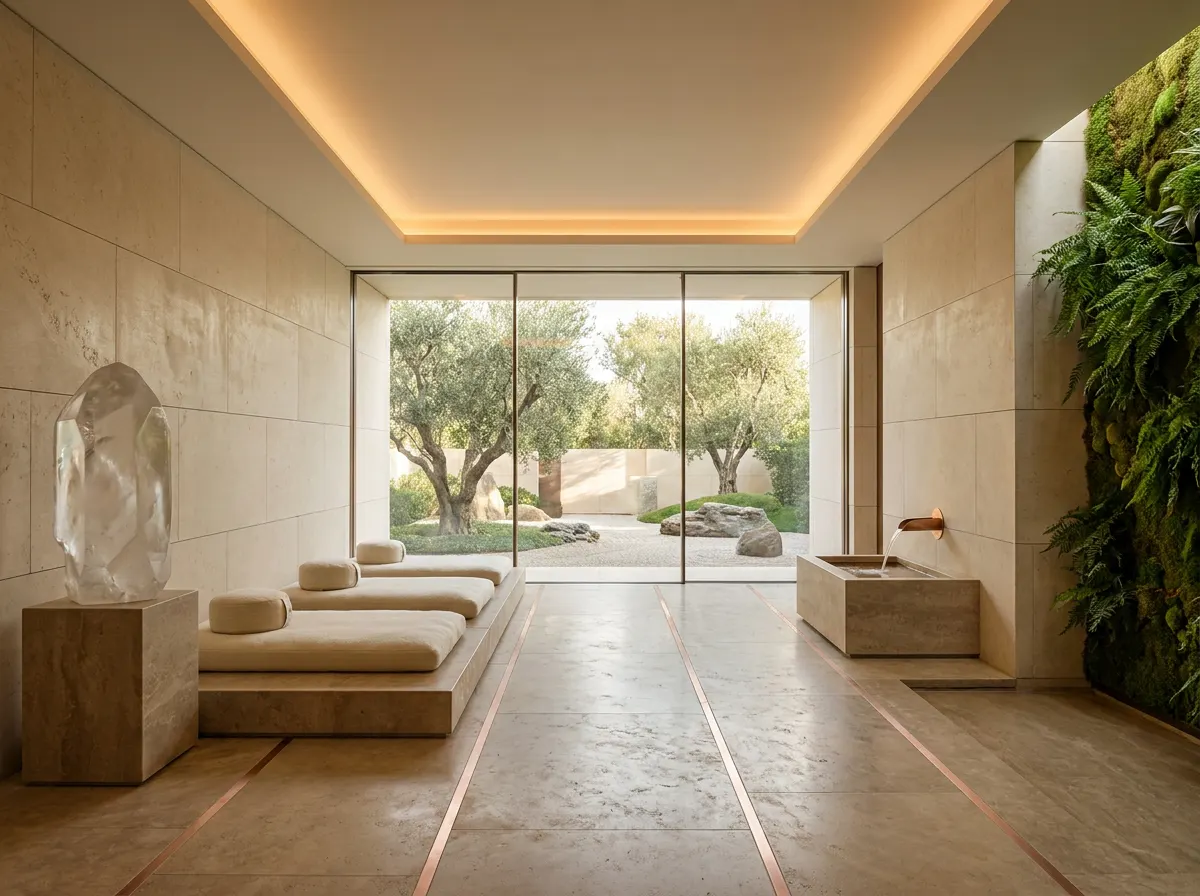
ÖND means Life's Breath, and a room designed for breathing and stillness is, in a sense, the purest expression of everything we do. It needs very little, but what it has must be right.
Clients increasingly ask for a room devoted to meditation, breathwork, prayer or simply quiet. It need not be large. It must, however, be the calmest place in the house, and that requires more thought than its simplicity suggests.
Choose the quietest place
Locate the room away from the kitchen, the entrance, the street and mechanical plant. A corner of the garden, an upper floor away from family traffic, or a space adjoining the primary suite often works well. A view to sky, trees or water is a gift, but silence matters more than scenery.
Silence by design
Acoustic separation in walls, floors and doors, soft furnishings and acoustic ceilings reduce outside noise and echo. Mechanical systems serving the room should be especially quiet. The aim is a room in which one can hear one's own breathing.
The best air in the house
A room for breathing should have the freshest, cleanest air in the home. Good filtered ventilation keeps carbon dioxide low even with the door closed, and temperature should be stable and comfortable. This is where the second of the Nine Pillars, air excellence, is felt most directly.
Light that softens
Natural light, softened by linen or paper screens, is ideal by day. In the evening, low, warm, indirect light, or candles where safe, supports the transition towards sleep. Bright overhead lighting has no place here.
Pure, simple materials
- Natural timber, stone, lime or clay plaster, linen and wool.
- A floor that is comfortable to sit on, with natural rugs or cushions.
- Minimal furniture and no screens or clutter.
- Fragrance-free or naturally scented, never synthetic air fresheners.
- Storage for mats and cushions so the room stays clear.
A threshold
The approach matters. A short passage, a change of floor material, a place to leave shoes, or a sliding screen marks the transition from the busy house into stillness. It is a small piece of design with a large effect.
Every ÖND commission begins with a private conversation. Call (310) 274-9999, write to kenneth@bhli.us, or read the Nine Pillars of Wellness Design to see the full framework.
Frequently Asked Questions
Common Questions
How do you design a meditation room at home?
How big does a meditation room need to be?
What materials are best for a meditation room?
Does ÖND design meditation and breathwork rooms?
Every ÖND residence begins with a private conversation.