How to Remove Microplastics From Your Body
By Kenneth Bordewick | Beverly Hills Luxury Interiors | ÖND | Life's Breath™ · In clinical collaboration with Dr. Thom E. Lobe MD and Dr. Fouad I. Ghaly MD
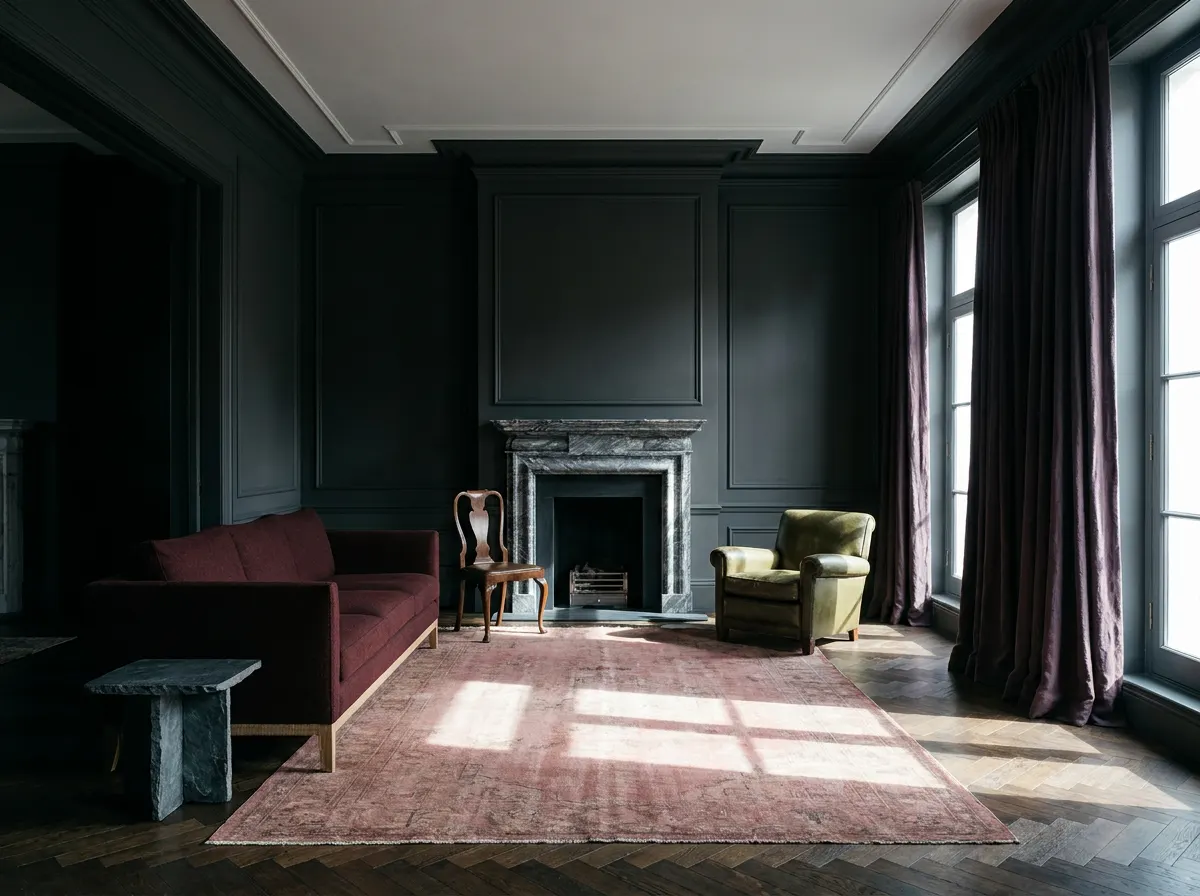
Let us begin with the distinction that almost every article on this subject fails to draw. Reducing your exposure to microplastics is well-evidenced, entirely achievable and largely a matter of specification. Removing microplastics already resident in your tissues is a far less certain proposition, and a very great deal of what is sold under the heading of a microplastic detox is marketing rather than medicine.
We say this as an atelier that has built its practice on material purity, and that stands to gain nothing from overstating the case. Honesty is the more valuable service. Research published in Environment International established the detection of plastic particles in human blood, and subsequent work by research groups internationally has identified them in lung tissue, placenta and other organs. The World Health Organization has reviewed the evidence on microplastics and, appropriately, characterises the human health consequences as an area of legitimate concern where the science is still maturing.
What follows is what the evidence supports, what it does not, and — because this is the only part of the problem an atelier can actually solve — the specification that reduces the burden at source.
Can You Flush Microplastics Out of Your Body?
This is the question put most often, and it deserves a direct answer rather than an evasion.
There is no validated protocol — dietary, supplemental or otherwise — proven to clear microplastics from human tissue. No juice, fibre regimen, binder, chelating agent, infrared session or over-the-counter detox product has been demonstrated in credible clinical research to reduce a measured body burden of plastic particles. Any product marketed on that claim is making a promise the literature does not support.
What the body does do is clear a proportion of ingested particles through ordinary elimination, and the smaller fraction that crosses into circulation is subject to the same immune and hepatic handling as other foreign particulates. That is a natural process, not a purchasable one. The single most effective intervention available to any person is therefore also the least glamorous: stop the inflow. Reduce what you ingest, drink and breathe, and the daily accumulation falls.
“I decline to sell a detox. What I can offer is a house that stops contributing to the problem — and that, unlike a supplement, works every hour of every day for as long as the house stands.”
— Kenneth Bordewick, Beverly Hills Luxury Interiors
Exposure Reduction Is an Interiors Problem
Here is the fact that reframes the entire question. Most people, considering their plastic exposure, think of bottled water and food packaging. Both matter. But a person spends the overwhelming majority of their life indoors, and the largest single reservoir of synthetic polymer in the average residence is not in the kitchen cupboard. It is the furniture.
The Sofa Is the Problem Nobody Names
The sofa is among the most-searched objects on the internet, and almost every sofa sold today is petroleum in disguise. A polyester or microfibre cover — plastic. A polyurethane foam core — plastic. A synthetic feather-alternative fill, a polypropylene webbing, a polyester wadding, a nylon thread, a foam-backed velvet: plastic throughout. Each of these components sheds fibres continuously under abrasion, and every occupant sits upon that abrasion for hours each day.
Our specification for upholstery admits no synthetic textile at all. Covers in linen, wool, hemp or cotton to GOTS or OEKO-TEX certification. Traditional fills of horsehair, coir, wool wadding and down over hand-tied springs and jute webbing, in the manner of a serious upholstery workshop — a construction that outlives foam by generations and sheds nothing petroleum-derived. Where resilience is required, natural latex in place of polyurethane. No flame-retardant chemical treatment of any kind.
Floors, Surfaces and Walls
Synthetic broadloom carpet is, in our view, the single most consequential material error in the modern interior — a vast surface area of nylon or polypropylene pile, abraded by every footfall, resupplying the airborne fibre load hour after hour. We do not specify it. Floors are solid timber, honed natural stone, or lime and clay screed, dressed where required with wool or a natural-fibre rug that can be lifted and beaten.
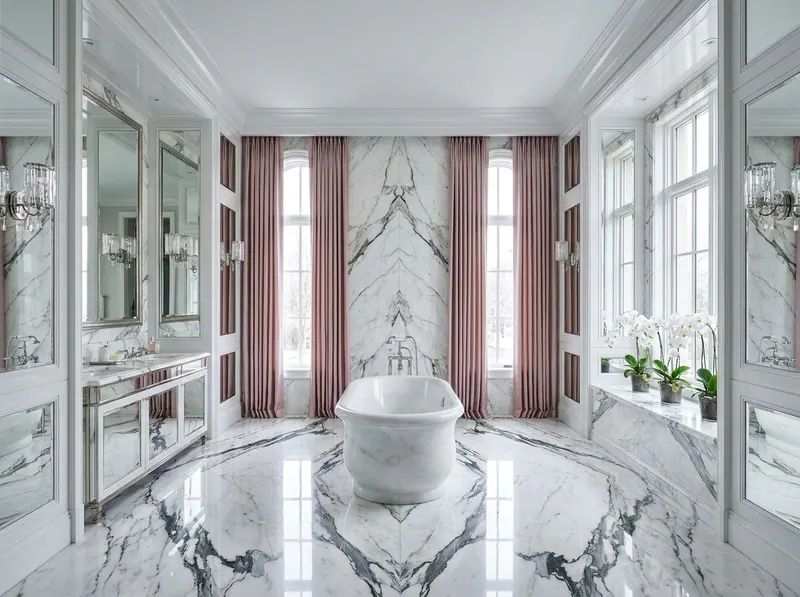
Surfaces are natural stone rather than resin-bonded engineered composite. Walls are lime or clay plaster rather than vinyl wallcovering. Joinery is solid timber rather than laminate-faced particle board. In each case the natural material is both the more beautiful and the non-shedding choice — which is the recurring lesson of this entire discipline.
Water, Air and Storage
Whole-home water filtration to a recognised standard — we specify to NSF International certification — treats the entire house rather than a single tap, which matters because showering and bathing are exposure routes as well as drinking. Airborne fibres are addressed by true HEPA filtration to EN 1822 classification, integrated into the fabric of the building rather than parked in a corner as an appliance. Food and water storage is glass, unlined stainless steel and glazed ceramic, never plastic, and never plastic warmed. The US EPA and the Harvard T.H. Chan School of Public Health Healthy Buildings programme have both long emphasised ventilation and source control as the foundations of indoor environmental quality; microplastics are no exception to that principle.
Blood Filtration: A Clinical Adjunct, Not a Consumer Product
Extracorporeal blood filtration therapies — including EBOO (Extracorporeal Blood Oxygenation and Ozonation) — are discussed in longevity medicine as a potential adjunct in this context. We are careful in our language. These are clinical procedures available by physician referral only. They are not administered by Beverly Hills Luxury Interiors, they are not a substitute for exposure reduction, and their specific efficacy against a measured microplastic body burden is not something we assert.
Dr. Thom E. Lobe MD and Dr. Fouad I. Ghaly MD are clinical partners to both Beverly Hills Luxury Interiors and ÖND | Life's Breath™, and every BHLI residential commission carries that physician credential. Where a client wishes to explore filtration therapy, they are referred to a physician. Where a client wishes to reduce their exposure by an order of magnitude, that is our work. You may read more about our clinical partners and the wider longevity programme.
“A client once asked me which supplement would clear the plastic from her blood. I told her the honest answer was none, and that we should instead replace the sofa she had been sitting on for eleven hours a day. That is the whole of my profession, expressed in a single sentence.”
— Kenneth Bordewick
Questions We Are Asked
How do you remove microplastics from your body?
There is no validated protocol proven to clear microplastics from human tissue. No supplement, binder, juice, sauna session or consumer detox product has been shown in credible clinical research to reduce a measured body burden. What is well-evidenced and entirely achievable is reducing ongoing exposure — natural-fibre textiles instead of synthetic upholstery, no synthetic carpet, whole-home water filtration, HEPA air filtration, and glass or stainless steel storage in place of plastic.
Can you flush microplastics out of your body?
Not through any purchasable protocol. The body clears a proportion of ingested particles through ordinary elimination, and circulating particulates are subject to normal immune and hepatic handling, but no product has been demonstrated to accelerate that meaningfully. Any item marketed as a microplastic flush or detox is making a claim the literature does not support. Reducing the daily inflow is the intervention that actually works.
Where do microplastics in the home come from?
Predominantly from synthetic textiles and furnishings. Polyester and microfibre upholstery, polyurethane foam cushioning, nylon and polypropylene broadloom carpet, vinyl wallcovering, laminate-faced particle board joinery and resin-bonded engineered stone all shed particles continuously under abrasion. Plastic food and water storage, and plastic warmed in contact with food, add an ingestion route on top.
Does blood filtration remove microplastics?
Extracorporeal blood filtration therapies, including EBOO, are discussed in longevity medicine as a possible adjunct, but they are clinical procedures available by physician referral only and their specific efficacy against a measured microplastic burden is not established. Beverly Hills Luxury Interiors does not administer medical treatments and does not present filtration as a substitute for exposure reduction.
Begin With a Longevity Home Wellness Design Audit
Exposure reduction is not achieved by a purchase. It is achieved by a specification, applied room by room, from the substrate outward. The Longevity Home Wellness Design Audit assesses your existing or proposed residence across air, water, material, light, acoustic, thermal and electromagnetic dimensions, and returns a prioritised, phased roadmap. The full methodology is documented in our white paper, and the underlying principles in the pillars.
Sources: Environment International (detection of plastic particles in human blood); World Health Organization review of microplastics and human health; US Environmental Protection Agency indoor air quality guidance; Harvard T.H. Chan School of Public Health Healthy Buildings programme; NSF International water treatment certification; EN 1822 HEPA classification; GOTS and OEKO-TEX textile certification; clinical counsel of Dr. Thom E. Lobe MD and Dr. Fouad I. Ghaly MD.
Beverly Hills Luxury Interiors does not administer medical treatments. All clinical protocols and longevity interventions should be discussed with a qualified physician — including Dr. Thom E. Lobe MD and Dr. Fouad I. Ghaly MD — before undertaking. All information in this article is educational in nature.


Every ÖND residence begins with a private conversation.