The Five Senses: A Framework for Living
By Kenneth Bordewick | Beverly Hills Luxury Interiors | ÖND | Life's Breath™ · In clinical collaboration with Dr. Thom Lobe MD and Dr. Fouad I. Ghaly MD
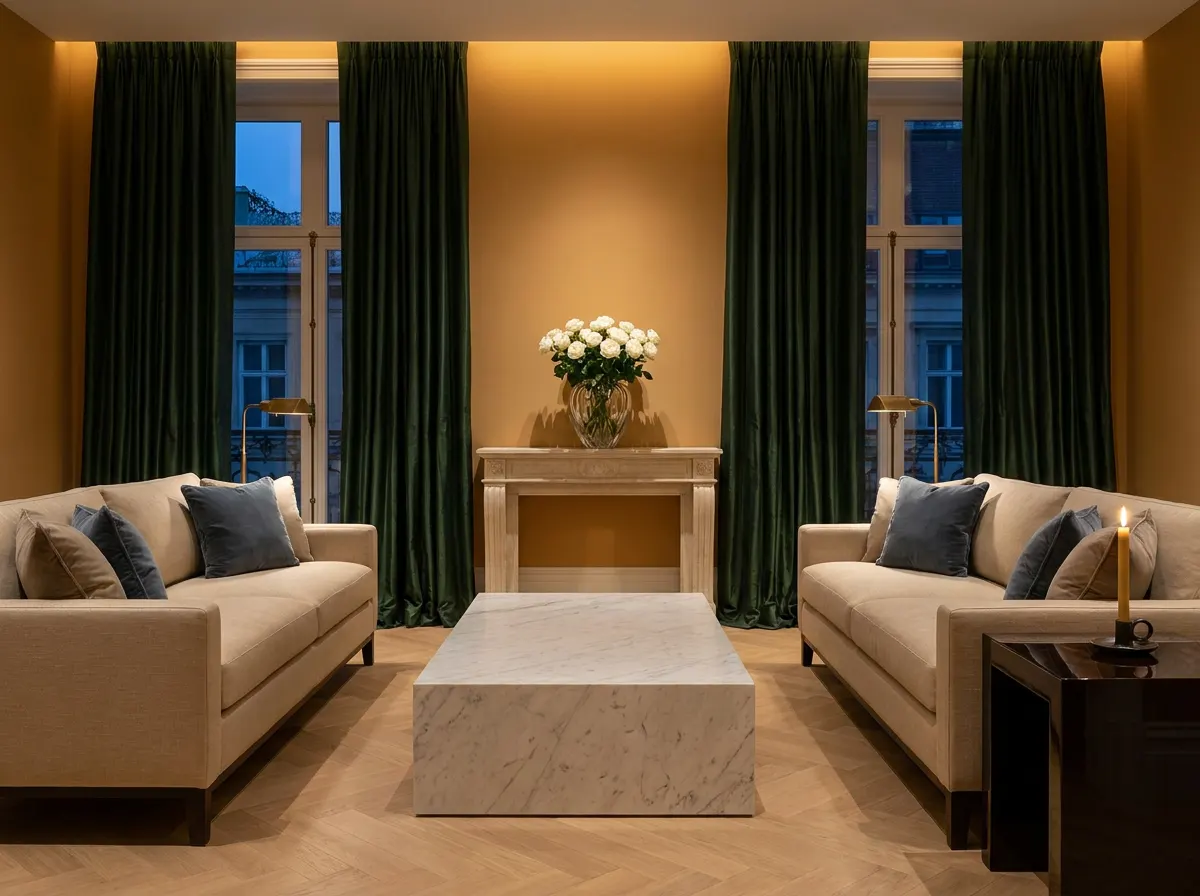
Within eleven minutes of entering a beautifully composed room, measurable physiological changes occur: heart rate decelerates, cortisol drops, and alpha brain waves associated with calm attention begin to dominate. The environment is not a backdrop to living. It is living itself — and it is working upon you, for better or for worse, in every moment you inhabit it.
Yet most homes — even expensive ones — are designed for the eye alone. One sense, engaging a fraction of the body's sensory architecture, whilst the remaining neurology of taste, touch, scent, and sound is left entirely to chance. The result is a space that looks extraordinary and performs, at the level of the nervous system, as something far less.
At Beverly Hills Luxury Interiors, Kenneth Bordewick has spent more than twenty-five years studying what the world's most extraordinary environments — from the private estates of European royalty to the palace suites of the Persian Gulf — share in common. The answer is never the budget. It is never the name upon the sofa. It is the deliberate, masterful orchestration of all five senses, simultaneously, without a single false note.
This is the Five Senses Framework — and it is the reason our commissions endure across generations.
The Architecture of Experience
The Five Senses Framework is not a design trend. It is a philosophy of biological engagement: the understanding that a human being is not merely a visual creature, and that spaces which speak only to the eye are, at the level of the nervous system, incomplete.
When each sense is deliberately addressed — when sight, sound, touch, scent, and taste are considered as instruments within the same orchestra — the result is not merely beautiful. It is restorative. It is a home that actively repairs the human being who inhabits it. Discover the broader principles that govern this approach at our quiet luxury wellness design framework.
I. Sight: The Language of Light and Proportion
Light is the first instrument — not the chandelier, though these matter, but the quality, spectrum, and rhythm of illumination across the full arc of the day. At BHLI, every commission incorporates Circadian Light Architecture: tunable systems calibrated to the body's biological clock, shifting from cool, energising daylight temperatures in the morning to warm, amber-hued spectrums by evening, supporting natural melatonin production and restorative sleep. The National Institute of General Medical Sciences confirms that circadian disruption is independently associated with metabolic disorder, cardiovascular disease, and accelerated cellular ageing.
Proportion is the second element of sight. Rooms designed with classical mathematical ratios — appropriate ceiling heights, golden section fenestration, considered spatial depth — create a subliminal sense of order that the nervous system recognises as ease. The eye rests where mathematics have placed it. The ambient anxiety of an ill-proportioned room is never consciously identified. It is, nonetheless, continuously experienced.
Colour, finally, is selected not for beauty alone but for biological effect. Our current palette — muted jewel tones, sage, slate blue, deep forest green, soft terracotta, warm charcoal — reflects environments that human physiology has found calming and restorative across millennia. Colour in a BHLI interior is deliberate, considered, and never arbitrary.
“A room designed only for the eye has addressed one sense and neglected four. The five senses do not operate independently — they compose the singular experience of being alive within a space.”
— Kenneth Bordewick, Beverly Hills Luxury Interiors
II. Sound: The Architecture of Silence
Most homes leak noise. Traffic. Mechanical systems. The structural vibration of a building in which sound attenuation was never considered. Each intrusion is a micro-stressor, elevating cortisol fractionally, maintaining the nervous system in a state of low-grade vigilance that prevents true restoration. Research published in The Lancet identifies chronic noise exposure as a significant contributor to cardiovascular disease, impaired cognitive function, and diminished immune response. The World Health Organisation classifies noise pollution as the second-largest environmental health risk in Europe.
Acoustic serenity within a BHLI commission is engineered from the structure outward: mass-loaded vinyl within walls, triple-glazed fenestration, sound-attenuating flooring systems, and — where appropriate — the calibrated inclusion of natural water features whose specific frequency masks intrusive ambient sound without adding to the nervous load. The result is a space that breathes in silence. That offers, for the first time for many clients, a room in which the nervous system may genuinely rest.
III. Touch: The Intelligence of Materials
The skin is the body's largest organ, in constant conversation with every surface it encounters. Synthetic materials — petroleum-derived textiles, polymer-coated surfaces, composite boards off-gassing formaldehyde — may satisfy the eye whilst communicating, at the cellular level, a subtle and continuous wrongness to the nervous system. Research published in Environment International in 2022 confirmed microplastic fibres — shed continuously from synthetic textiles — in the blood of eighty per cent of participants tested, and in human lung tissue. By 2024, those particles had been linked to a 4.5-fold increase in cardiovascular events in research published in the New England Journal of Medicine.
The Five Senses Framework demands material purity: natural stone, solid hardwood, hand-applied plaster, linen, cashmere, silk, and cotton. Materials that have accompanied human habitation for thousands of years and that the nervous system recognises, at a level below conscious awareness, as safe. As home. This principle is central to the clinical work of our physician partners, Dr. Thom E. Lobe MD and Dr. Fouad I. Ghaly MD, whose collaboration with BHLI and ÖND | Life's Breath™ ensures that the biological dimensions of material choice are addressed with the rigour of a medical protocol. Explore these principles further at our wellness design principles.
IV. Scent: The Memory of Place
Scent bypasses the thalamus — the brain's sensory relay station — and connects directly to the limbic system, the seat of memory and emotion. No other sense holds this privilege. A single fragrance can transport a person across forty years and ten thousand miles. This is not poetry. It is neuroanatomy — documented in the foundational olfactory research of Nobel laureates Richard Axel and Linda Buck, whose 2004 prize in Physiology or Medicine was awarded for the discovery of precisely this mechanism.
At BHLI, scent is never an afterthought and never a product. It is a curated olfactory environment: the particular quality of beeswax on aged wood, the mineral coolness of natural stone in a shaded corridor, the breath of a garden admitted through precisely positioned fenestration. Where ambient scent systems are employed, they use only natural botanical essences, diffused at concentrations that engage without overwhelming — that anchor the inhabitant to the space through a sense that memory will retain long after the visual details have faded.
“A visitor to one of our commissions seldom recalls the exact fabric of the sofa. They recall, for years afterwards, how the room smelled — and how it made them feel. Scent is the longest memory the senses possess.”
— Kenneth Bordewick, Beverly Hills Luxury Interiors
V. Taste: The Final and Most Intimate Refinement
The fifth sense is the most intimate — and the most frequently overlooked by designers who have not studied the biology of the spaces they create. Yet the taste of water — its mineral content, its filtration, its temperature — is itself an experience of place. A 2022 study confirmed microplastic particulates in municipal water supplies across multiple countries, with dermal and ingestion exposure occurring across every shower, every glass drawn from the tap, every moment of preparation in an unfiltered kitchen.
At BHLI, whole-home water filtration and hydrogen-rich hydration stations ensure that the first glass drawn each morning is, in itself, an act of wellness. Beyond water, the Five Senses Framework considers the full environment of dining: the acoustics of a dining room, the quality of light at the table, the scent of the space, the tactile quality of natural linen and fine ceramics. A meal consumed in a space designed for the full sensory experience is not merely nourishment. It is, in the truest sense, restoration.
The Framework in Practice
The finest commissions Beverly Hills Luxury Interiors has completed — across Beverly Hills, Manhattan, London, Dubai, and the Persian Gulf — share one characteristic. Visitors cannot immediately articulate why the space feels as it does. They know only that something has shifted within them. That they breathe more deeply. That the noise of the world has receded. That they feel, for the first time in a very long time, entirely at ease.
That is the Five Senses Framework. And it is what distinguishes a house from a sanctuary. The ÖND | Life's Breath™ philosophy, which underpins every Longevity Home commission, frames the residential environment not as the backdrop to a life of refinement, but as its primary instrument. To address all five senses — deliberately, masterfully, and in clinical alignment with the biology of the human being who inhabits the space — is not an aesthetic ambition. It is the most profound act of design.
Commission Your Longevity Home Wellness Design Audit
The Longevity Home Wellness Design Audit — offered by Beverly Hills Luxury Interiors and ÖND | Life's Breath™ in clinical collaboration with Dr. Thom Lobe MD and Dr. Fouad I. Ghaly MD — delivers a comprehensive assessment of your current residential environment across every sensory and biological dimension: light quality and circadian calibration, acoustic architecture, material toxicology, air and water purity, olfactory environment, and thermal design. The audit concludes with a prioritised, physician-informed remediation roadmap and, where clinically indicated, an optional consultation with our physician partners. Your home is engaging all five of your senses in every moment you inhabit it. The only question is whether it is doing so deliberately — and whether it is working for you, or against you.
Enquire About Your AuditSources: National Institute of General Medical Sciences. “Circadian Rhythms.” U.S. Department of Health and Human Services, 2023. | Nobel Prize in Physiology or Medicine 2004 — Axel R & Buck L. “Odorant receptors and the organisation of the olfactory system.” Nobel Committee for Physiology or Medicine. | World Health Organisation. “Environmental Noise Guidelines for the European Region.” WHO Regional Office for Europe, 2018. | Münzel T, et al. “Environmental noise and the cardiovascular system.” Journal of the American College of Cardiology, 2018. | van Doorn R, et al. “Discovery and quantification of plastic particle pollution in human blood.” Environment International, 2022. | Marfella R, et al. “Microplastics and nanoplastics in atheromas and cardiovascular events.” New England Journal of Medicine, 2024. | Reference: Dr. Thom E. Lobe MD, Beneveda Medical Group. | Reference: Dr. Fouad I. Ghaly MD. | Beverly Hills Luxury Interiors | ÖND | Life's Breath™
Every ÖND residence begins with a private conversation.