Where Ancient Wisdom Meets Modern Longevity Design
By Kenneth Bordewick | Beverly Hills Luxury Interiors | ÖND | Life's Breath™ · In clinical collaboration with Dr. Thom Lobe MD and Dr. Fouad I. Ghaly MD
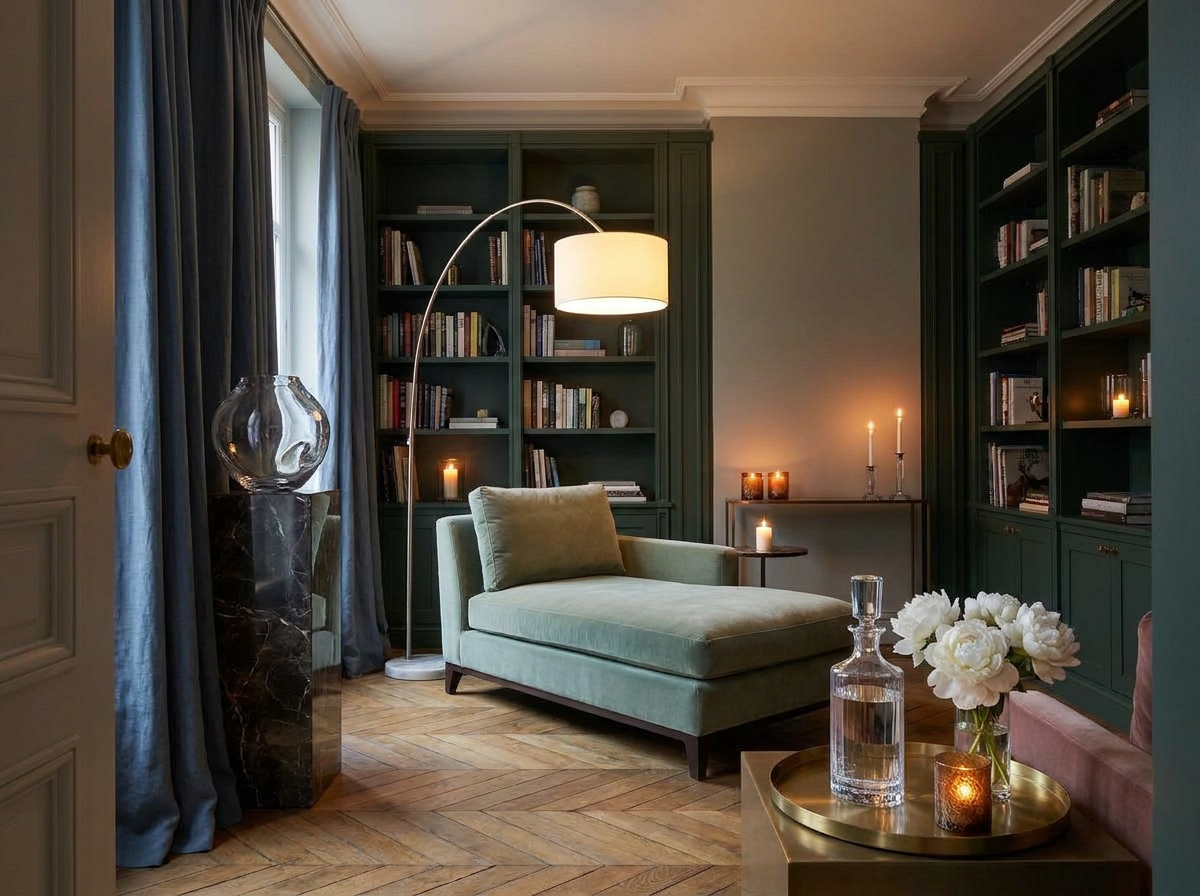
For three thousand years, Eastern civilisations built their understanding of health and human flourishing upon one radical premise: that the environment is not the backdrop to life, but its primary determinant.
Vastu shastra, the ancient Indian science of spatial arrangement, prescribed the orientation of rooms to the cardinal directions centuries before Western medicine discovered the circadian axis. Feng shui mapped the flow of life force — qi — through the home with a precision that modern environmental psychology is only now beginning to validate. Wabi-sabi, the Japanese philosophy of imperfect, transient beauty, encoded the neurological principle that material authenticity calms the nervous system in ways that synthetic perfection never can.
These were not superstitions. They were empirical observations, accumulated over millennia of living, about how the built environment governs human biology. Kenneth Bordewick of Beverly Hills Luxury Interiors and ÖND | Life's Breath™ has spent twenty-five years asking why Western luxury design — for all its cost and sophistication — so rarely draws upon this accumulated intelligence. The answer, he argues, is not ignorance. It is haste. Read more at Quiet Luxury Wellness Design and Wellness Design Principles.
I. The Eastern Principle Western Design Has Forgotten
The most consequential insight shared by every major Eastern design philosophy is one that Western interior design has, until recently, largely ignored: that the home has a biological relationship with the body, not merely an aesthetic one.
Vastu shastra's insistence on north-east orientation for sleeping chambers was not arbitrary symbolism. It reflects the magnetic axis of the Earth and its influence on the body's electromagnetic environment during sleep — a principle that modern research into geomagnetic fields and circadian biology is beginning to corroborate. The feng shui mandate for unobstructed movement corridors — the free passage of qi — corresponds precisely to what neuroscience identifies as the cognitive ease that allows the brain to enter parasympathetic rest. These are not coincidences. They are the convergent conclusions of different methods arriving at the same biological truth.
“The ancient East did not design spaces for beauty. It designed them for biology — and called that beauty.”
— Kenneth Bordewick
II. Material Philosophy: What the Hand Knows
Wabi-sabi's reverence for natural, imperfect materials — weathered stone, handmade ceramics, unfinished timber — is, through the lens of modern neuroscience, a precise prescription for material honesty. The hand that moves across natural stone receives a sensory signal of authenticity that the nervous system registers as safe. Synthetic materials, however convincingly rendered, deliver a dissonance that the body measures even when the mind does not.
At Beverly Hills Luxury Interiors, every material specification begins from this Eastern understanding. Natural stone, hand-woven linen, unlacquered timber, plaster of natural lime: these are the materials of the wabi-sabi interior reinterpreted through the formal language of European-atelier elegance. They are also, as physician partners Dr. Thom Lobe MD and Dr. Fouad I. Ghaly MD have confirmed in clinical collaboration, biologically neutral — they do not off-gas volatile organic compounds, they do not introduce microplastic particulates into the domestic air supply, and they do not register as environmental threats in the body's threat-response system.
III. Water, Sound, and the Architecture of Stillness
Both Eastern and Western traditions understand water as the sensory element of the home that most directly governs psychological state. The feng shui principle of flowing water at the entrance — inducing the sound of gentle movement before the threshold is crossed — corresponds precisely to what acoustic psychology identifies as the parasympathetic response to water sounds: a measurable reduction in cortisol, a shift from sympathetic to parasympathetic dominance, a slowing of the respiratory rate.
The ÖND | Life's Breath™ methodology incorporates water features not as decorative accessories, but as acoustic instruments — placed with the same intention as a musical composition, designed to govern the experience of arrival and rest throughout the home. The sound of water moving through natural stone is among the most biologically powerful interventions available in interior design, and among the most consistently overlooked by Western practitioners.
The Integration: A Standard, Not a Style
The synthesis of Eastern wisdom and Western longevity science is not, at Beverly Hills Luxury Interiors, a stylistic exercise. It is a standard of design intelligence applied to every commission — an acknowledgement that the most durable insights about how spaces govern human biology were arrived at long before modern medicine had the instruments to verify them.
When Kenneth Bordewick commissions a residence in Beverly Hills, Manhattan, London, or the Persian Gulf, the ancient design codes of feng shui, vastu shastra, and wabi-sabi are not referenced as cultural motifs. They are interrogated as sources of biological intelligence — filtered through the clinical rigour of physician partnership and the formal elegance of a twenty-five-year atelier practice.
The result is a home that both traditions would recognise as intelligent. And that the body, without any explanation, immediately knows to be right.
Begin with the Longevity Home Wellness Design Audit
The Longevity Home Wellness Design Audit delivers a comprehensive, physician-aligned assessment of your home's biological environment — integrating both Eastern spatial intelligence and Western longevity science — and provides a prioritised roadmap for transformation. Contact Beverly Hills Luxury Interiors to commission your audit.
Enquire About Your AuditSources: Rao, M.S. “Vastu Shastra and its influence on modern architectural design.” International Journal of Architecture and Planning, 2019. | Kaplan, R. and Kaplan, S. The Experience of Nature: A Psychological Perspective. Cambridge University Press, 1989. | Ulrich, R.S. “View through a window may influence recovery from surgery.” Science, Vol. 224, 1984. | Alvarsson, J.J. et al. “Stress Recovery during Exposure to Nature Sound and Environmental Noise.” International Journal of Environmental Research and Public Health, 7(3), 2010. | Reference: Dr. Thom Lobe MD, Beneveda Medical Group, Beverly Hills — regenerative and longevity medicine. | Reference: Dr. Fouad I. Ghaly MD — integrative longevity and environmental medicine.