The Most Common Mistakes in Wellness Home Design
By Kenneth Bordewick · 6 min read
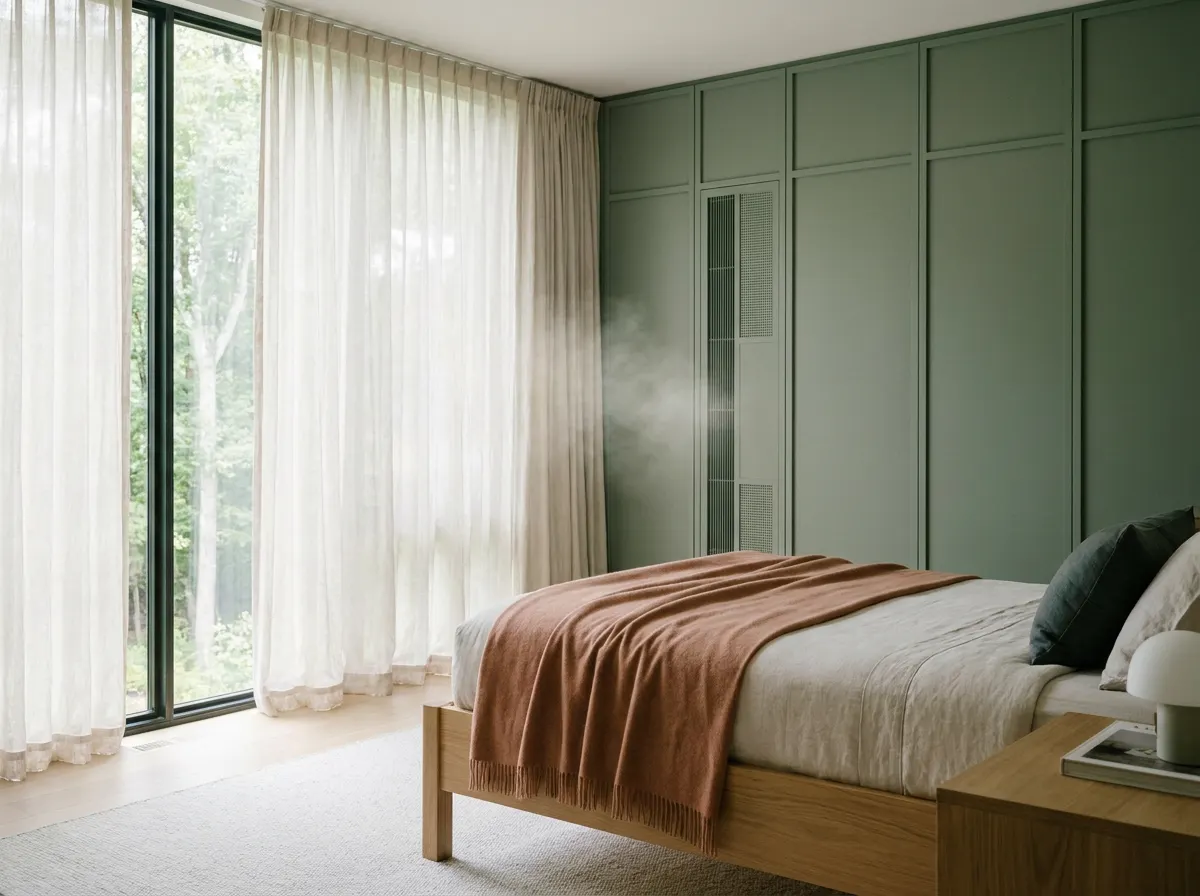
Most wellness homes fail for the same reason: they are furnished with wellness products rather than designed as a healthy environment. The result looks the part and measures poorly.
I am often invited into houses that have spent a great deal on wellness and received surprisingly little for it. There is a cold plunge, a red-light panel and a sauna, yet the bedroom air is stale by three in the morning, the lighting is the same harsh white from breakfast to midnight, and the new joinery is still releasing the smell of its finishes. None of the equipment is wrong. It is simply in the wrong order.
Mistake one: buying equipment before diagnosing the house
The first step in any ÖND commission is a Wellness Design Audit: measuring the home's air, light, water, sound, temperature and electromagnetic environment as they are, room by room. Without that, a homeowner is guessing. With it, the priorities are usually obvious, and they are rarely the most glamorous items on the wish list.
Mistake two: sealing the house without designing the air
Modern construction is rightly airtight for energy efficiency. But an airtight house without balanced mechanical ventilation and proper filtration simply traps carbon dioxide, moisture and the emissions of everything inside it. Air excellence is the second of the Nine Pillars for a reason. Fresh, filtered air, delivered quietly to bedrooms through the night, does more for most households than any device in the gym.
Mistake three: lighting for appearance, not for biology
Most luxury lighting schemes are designed to flatter the room. Few are designed for the people in it. Bright, cool, daylight-rich light in the morning and warm, dim, low-level light in the evening support the body's natural rhythm; the reverse undermines it. Circadian light architecture plans both the fittings and the controls so the house follows the day without anyone touching a switch.
Mistake four: specifying beautiful materials that are not clean
Some of the most expensive finishes on the market are also among the most chemically active: certain lacquers, adhesives, foams, treated fabrics and synthetic carpets. Material purity means asking for emissions data and composition before approval, choosing natural fibres, solid timbers and mineral finishes wherever possible, and allowing new interiors to off-gas before the family moves in.
Mistake five: forgetting the bedroom
We spend roughly a third of our lives asleep, and the bedroom is where wellness design pays the greatest return. It should be the darkest, quietest, coolest and cleanest room in the house, with the least electrical activity near the bed. Too often it receives the least technical attention, because it is the room guests never see.
Mistake six: treating water as a plumbing matter
Water quality varies from one municipality to the next and from one old pipe to another. It should be tested before filtration is chosen, because the right system depends on what is actually present. A whole-home system, with point-of-use treatment for drinking water, is usually the sensible combination.
Mistake seven: never measuring again
A wellness home is not finished on the day of handover. Filters load, settings drift and families change how they use rooms. Continuous monitoring of the key measures, and a simple annual review, keep the house performing as it was designed to.
The right order
- Audit the home and measure every pillar.
- Fix the fundamentals: air, light, materials, water and the bedroom.
- Add the specialist spaces: sauna, contrast therapy, treatment rooms.
- Monitor continuously and review each year.
Every ÖND commission begins with a private conversation. Call (310) 274-9999, write to kenneth@bhli.us, or read the Nine Pillars of Wellness Design to see the full framework.
Frequently Asked Questions
Common Questions
What is the biggest mistake in wellness home design?
Why is ventilation so important in a wellness home?
Which room matters most in wellness design?
How does ÖND begin a wellness design project?
Every ÖND residence begins with a private conversation.