Biophilic Design: Bringing Nature Indoors Without Bringing in Problems
By Kenneth Bordewick · 5 min read
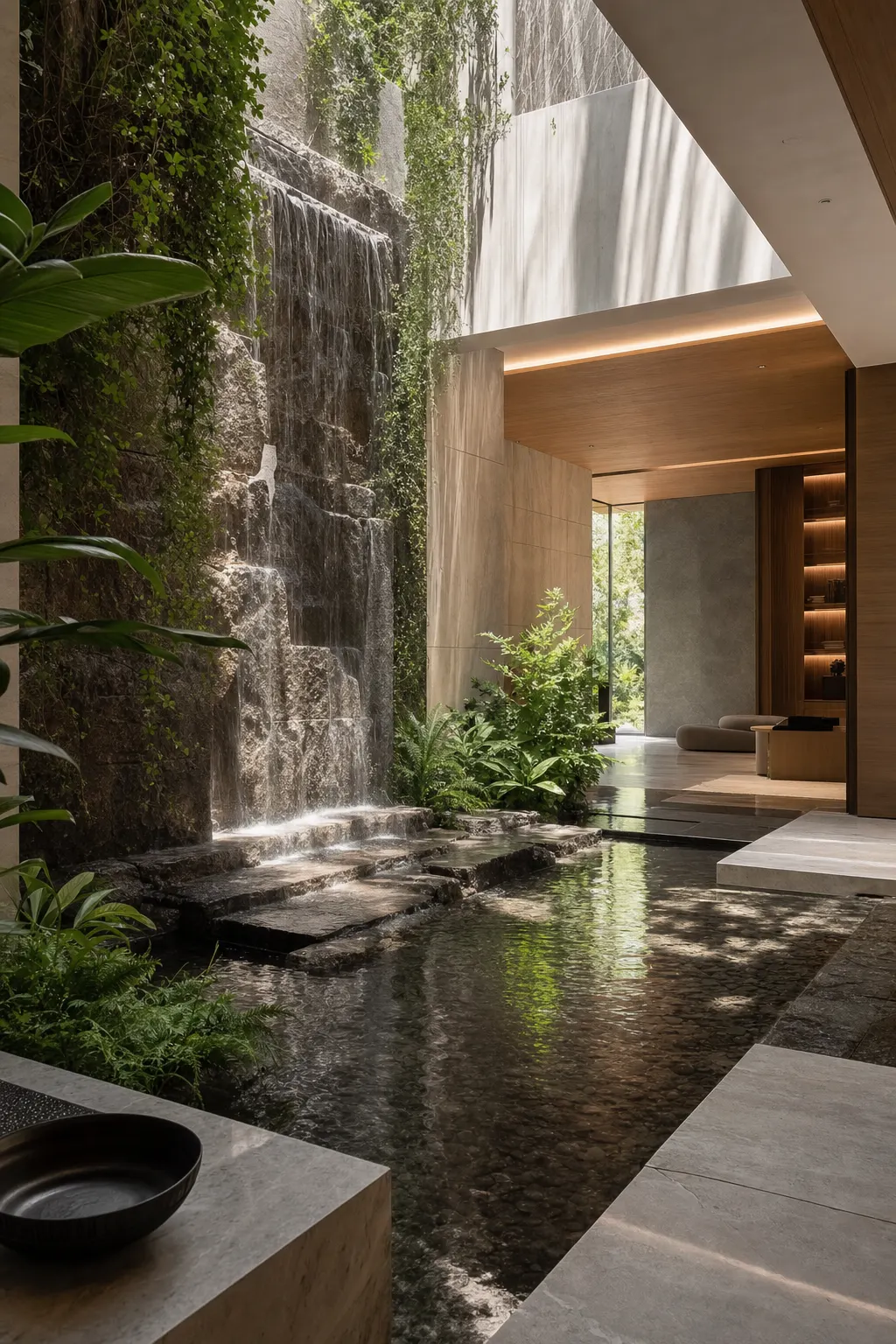
We are calmer in the presence of nature, and a well-designed home can bring that calm indoors. But biophilic design done carelessly brings moisture, mould and maintenance with it.
Biophilic design is the practice of connecting the people in a building with nature. It has become fashionable, and like most fashions it is often reduced to a living wall in the entrance hall. True biophilic design is broader and more subtle, and it begins long before anyone chooses a plant.
Daylight and views come first
The most powerful connection with nature is the sky. Generous daylight, views to gardens, trees, water or horizon, and the changing light of the day through the rooms are the foundation of biophilic design. They also support the body clock, which links this pillar directly to circadian light architecture.
Natural materials and textures
Solid timber, stone, lime and clay plasters, linen, wool and silk bring nature's textures and variation into a room. They are also, as a rule, cleaner for the air than many synthetic alternatives. Here biophilic design and material purity are the same thing.
Plants, chosen and placed with care
Plants bring life and colour, but they are not a substitute for ventilation and filtration. Choose species suited to the light and humidity of each room, use healthy growing media, avoid overwatering, and plan for professional care. A few beautiful, healthy plants are better than a great many struggling ones.
Water, with caution
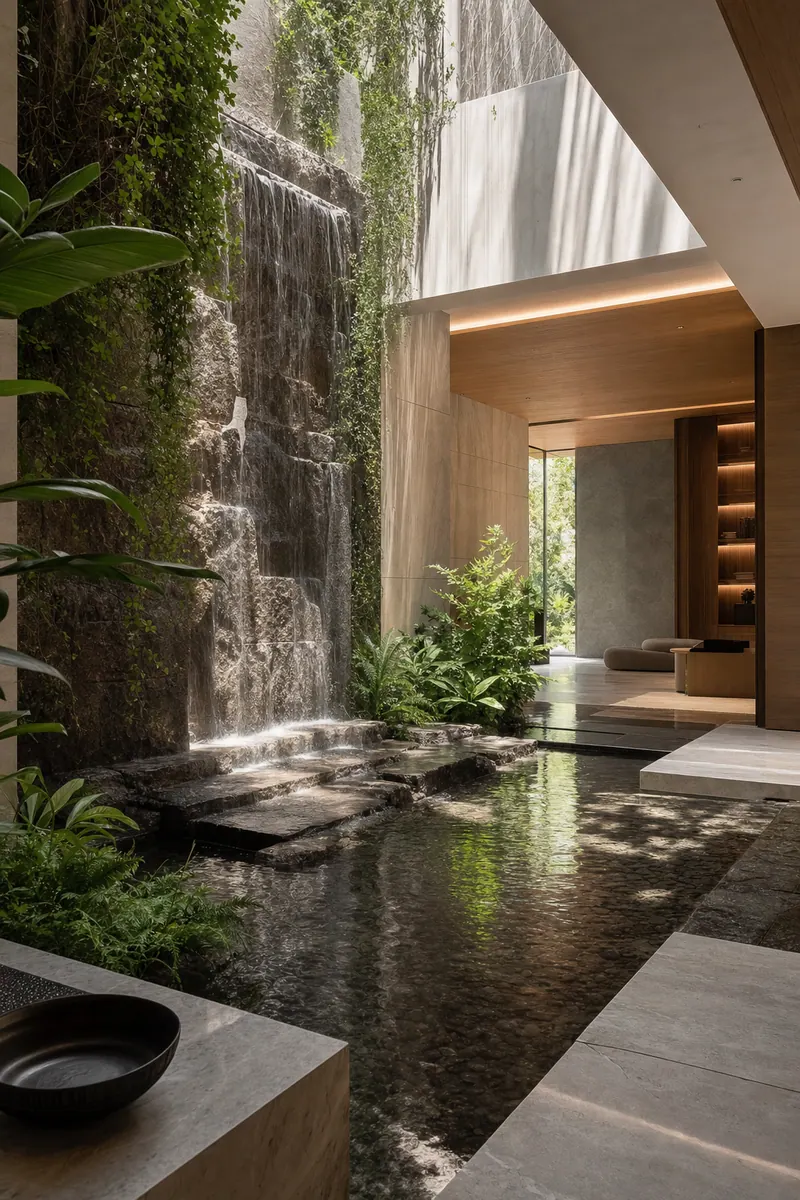
Indoor water features can be wonderfully calming, both for their sound and their movement. They must be designed with proper filtration, treatment and drainage, and their effect on room humidity must be considered. Still or poorly maintained water can become a source of contamination.
Courtyards and thresholds
Some of the most successful biophilic homes I know are arranged around courtyards, loggias and terraces that blur the line between inside and out. Sliding walls, covered outdoor rooms and planted courtyards allow fresh air, light and greenery to become part of daily life.
Avoiding the problems
- Design living walls with integrated irrigation, drainage and moisture protection.
- Monitor humidity in rooms with many plants or water features.
- Keep soil and planters away from bedrooms where mould sensitivity is a concern.
- Plan professional maintenance from the outset.
- Never rely on plants to clean the air; use proper ventilation and filtration.
Every ÖND commission begins with a private conversation. Call (310) 274-9999, write to kenneth@bhli.us, or read the Nine Pillars of Wellness Design to see the full framework.
Frequently Asked Questions
Common Questions
What is biophilic design?
Do houseplants clean indoor air?
Can living walls cause mould?
Does ÖND use biophilic design?
Every ÖND residence begins with a private conversation.